
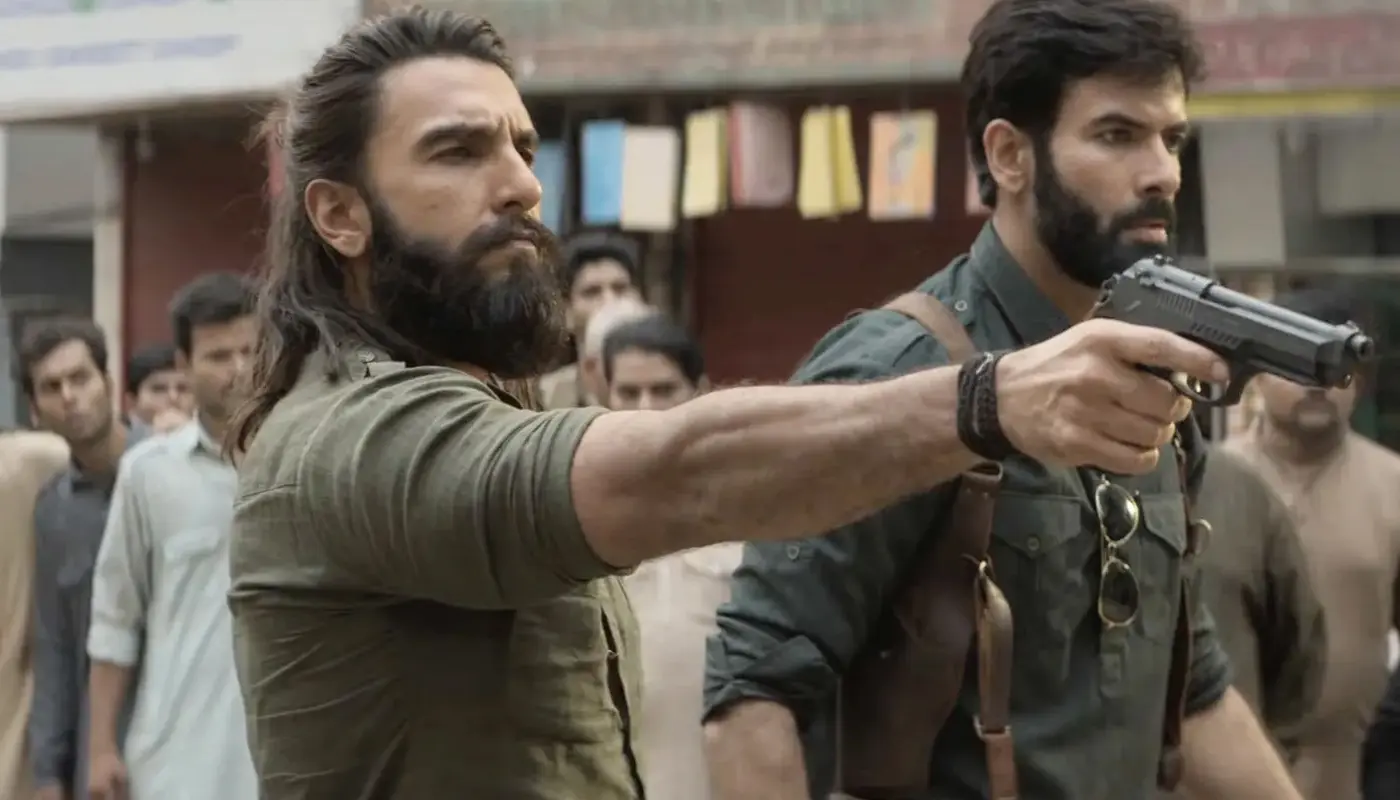
Dhurandhar shatters expectations as 2025’s biggest blockbuster, smashing ₹800+ crore at the Indian box office and redefining what theatrical cinema can achieve in the streaming era. Ranveer Singh and director Aditya Dhar’s geopolitical spy thriller proves that gripping storytelling, authentic tradecraft, and big-screen spectacle still pack cinema halls—and it’s already revolutionizing the future of Hindi cinema with record-breaking collections that rival Hollywood titans.
Dhurandhar’s Record-Breaking Dominance
In just three weeks, Dhurandhar became the highest-grossing Bollywood film ever in India with ₹806.8 crore net collection, surpassing Jawan’s ₹640 crore and Chhaava’s ₹615 crore lifetime earnings. Worldwide, the spy thriller crossed ₹1,201.5 crore, making it one of the most profitable Hindi films with a minimal budget—a seismic shift in industry economics that proves theatrical releases aren’t dead.
The film’s phenomenal second weekend jump of 78% occupancy and record-breaking third Friday (534K tickets on BookMyShow alone) demolished predictions about theatrical fatigue. Trade analysts credit Aditya Dhar’s screenplay architecture—balancing 3.5-hour runtime with relentless pacing—for keeping audiences glued through repeat viewings and word-of-mouth explosions.
Top 5 Highest-Grossing Hindi Films: India Net Collection
| Rank | Film Name | Year | Net Collection (₹ Cr) |
|---|---|---|---|
| 1 | Pushpa 2: The Rule (Hindi) | 2024 | 836.09 |
| 2 | Dhurandhar | 2025 | 806.8 |
| 3 | Jawan | 2023 | 640.42 |
| 4 | Stree 2 | 2024 | 627.50 |
| 5 | Chhaava | 2025 | 615.39 |
Why Dhurandhar Revolutionized Indian Cinema
Unlike typical Bollywood spy thrillers that glorify action, Dhurandhar flips the script—entire narrative unspools in Pakistan through the villain’s perspective, exploring Rehman Dakait’s (Akshaye Khanna) motivations with Shakespearean depth. This fresh approach, combined with authentic tradecraft consultancy from active intelligence officers, shattered audience expectations of what Hindi cinema could explore geopolitically and emotionally.
Ranveer Singh’s performance as undercover agent Hamza Ali Mazari abandons MCU heroism for haunted moral ambiguity. His Danish-accented Mandarin dialogues, seduction scenes, and physical gauntness proved that big-budget Hindi films could compete with prestige television on psychological complexity. Director Aditya Dhar, who debutted with Uri, crafted a screenplay architecture that respects audience intelligence—no gratuitous glamour, only grit.
The Dhurandhar Effect: Cinema Halls Win the Future
In an era where Netflix, Disney+, and Amazon Prime relentlessly cannibalize box office, Dhurandhar’s ₹800+ crore haul signals a seismic shift—audiences return to theaters when content delivers soul alongside spectacle. The film surpassed global Hollywood juggernauts Avatar: The Way of Water and Avengers: Endgame in domestic India net collection, proving that cultural authenticity and narrative depth beat CGI and franchise fatigue.
Trade experts now acknowledge that “streaming is convenient, but cinema, when done right, remains irreplaceable.” Dhurandhar’s week-on-week growth—defying traditional front-loaded box office models—suggests audiences crave theatrical experiences for immersive stories. Multiplexes report 78% occupancy even on weekdays, unusual for December cinema. The implications for Hindi film industry economics are staggering: if Dhurandhar’s blueprint succeeds, expect more big-budget, grounded narratives targeting educated urban audiences instead of formula-driven masala.
What Dhurandhar’s Success Means for Cinema’s Future
Dhurandhar’s ₹806.8 crore net collection—achieved against streaming platforms’ infinite supply—reshapes producer confidence. Star power (Ranveer Singh, Akshaye Khanna, Sanjay Dutt, R Madhavan) combined with intellectual storytelling proved bankable. Producers now greenlighting ambitious period thrillers, geopolitical dramas, and character-driven narratives that OTT platforms hesitate to fund—partly due to risk aversion, partly because theatrical budgets exceed streaming economics.
Season 2 confirmations, worldwide attention, and critical adoration signal Hollywood’s awakening to Hindi cinema’s global appeal. Dhurandhar positioned India not as market, but as talent pool and story source—expect more international collaboration, Korean-influenced craftsmanship, and Tamil/Telugu pan-India strategies driving Hindi film innovation forward.
Star Power & Craftsmanship: Why the Ensemble Works
Casting director Mukesh Chhabra handpicked Akshaye Khanna for Rehman Dakait—a role demanding moral ambiguity, not villainy—transforming him into 2025’s revelation. Sanjay Dutt’s S.P. Aslam counters with state brutality; R Madhavan’s IB chief adds gravitas. Sara Arjun’s Yalina provides romantic stakes without sacrificing thriller momentum. Each actor elevated by Aditya Dhar’s meticulous writing, which refuses stereotypes.
Shashwat Sachdev’s original score merges orchestral grandeur with subcontinental folk, amplifying dread without manipulation. Cinematography captures Karachi’s gritty authenticity—no Bollywood gloss, only cold winters and political paranoia. Music supervisor’s decisions to use silence instead of score during interrogation scenes earned critical raves. Production design transforms real Lyari locations into moral labyrinth.
Final Thoughts
Dhurandhar isn’t just a blockbuster—it’s a watershed moment for Hindi cinema’s creative ambition. Where Bollywood once mimicked Hollywood, it now sets its own playbook: grounded geopolitics, morally gray protagonists, and 3.5-hour narratives that hold audience attention through intelligence, not spectacle inflation. ₹806 crore net validates the bet.
Ranveer Singh’s haunted performance rivals Riz Ahmed’s The Night Of descent; Akshaye Khanna steals every scene; Aditya Dhar’s direction proves lightning can strike twice. Watch this now—not just entertainment, but a manifesto: cinema halls matter when filmmakers respect their audiences’ time and intelligence. Dhurandhar is essential viewing and the blueprint for Hindi cinema’s next decade.
