
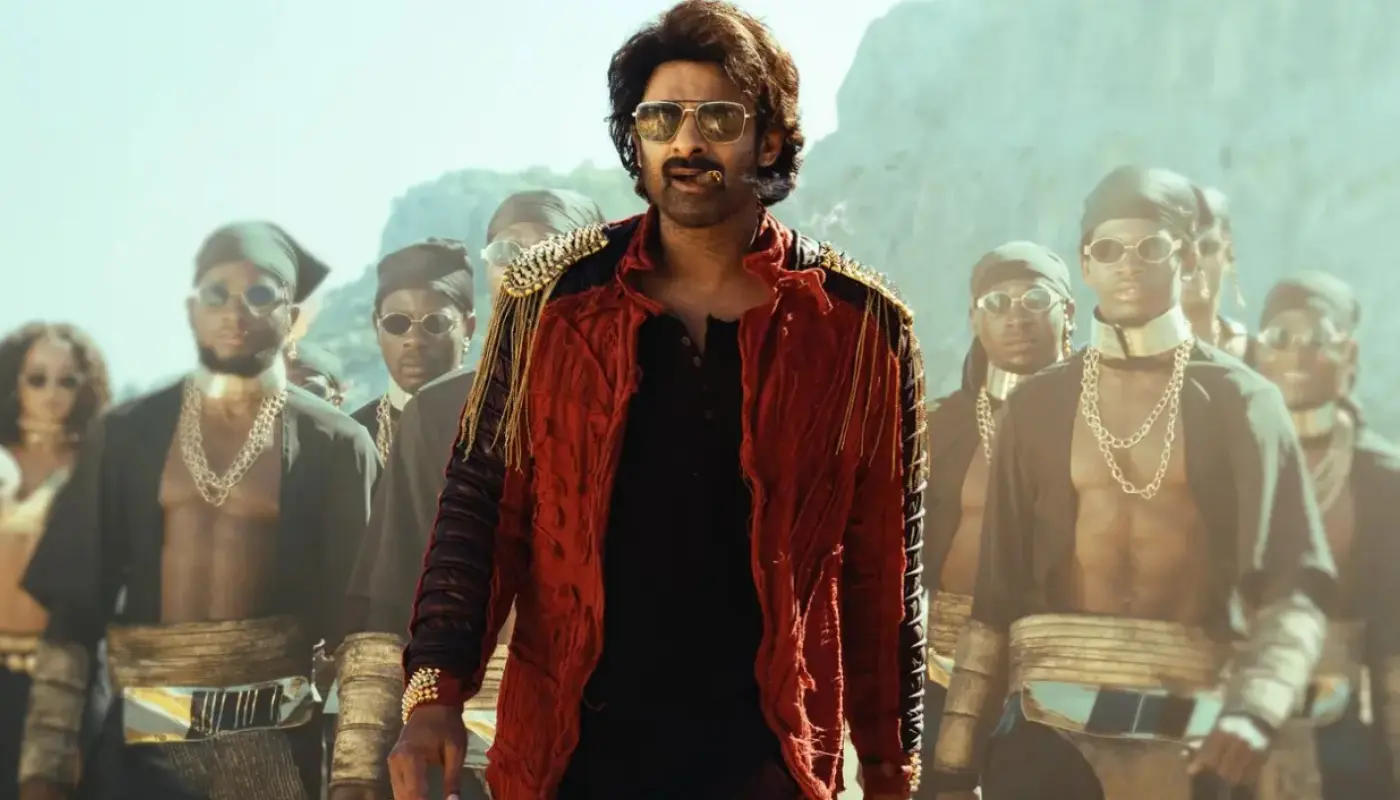
Prabhas’ horror-comedy The Raja Saab explodes past ₹100 crore worldwide on day 1, proving the pan-India superstar’s box office magnetism remains unstoppable—yet mixed reviews and negative word-of-mouth signal creative struggles ahead. Directed by Maruthi, this ambitious genre-flip boasts strong technical production but falters on storytelling, weak VFX, and a disjointed screenplay that fans and critics alike are calling his biggest misstep since Adipurush.
Prabhas Rajasahab: ₹100 Crore Opening Masked by Critical Collapse
Released January 9, 2026, The Raja Saab collected ₹54.15 crore India net (including ₹9.15 crore paid previews), plus ₹26 crore overseas gross—totaling ₹100+ crore worldwide day 1 gross. This marks the 6th biggest opening for Prabhas globally, below Adipurush’s ₹127.36 crore but surpassing Stree 2’s ₹84.06 crore, making it India’s biggest horror-comedy opener.
However, day 2 brutal reality hit: sharp 77% drop to ₹12.24 crore net, signaling catastrophic word-of-mouth. By day 3 (Sunday), collections stabilized at ₹75.14 crore cumulative India net, but occupancy plummeted to 17.3% across Telugu, Hindi, Tamil markets. Experts attribute collapse to “weak VFX,” “cringe-worthy plot,” and “disjointed screenplay” that even Prabhas’ star power couldn’t salvage.
Story follows Raju (Prabhas) searching for his grandfather Pekamedala Kanakaraju (Sanjay Dutt), an exorcist thought dead but returning as a dangerous spirit. The premise—horror-fantasy blending supernatural drama with forced comedy—never achieves tonal coherence. Three female romantic interests (Malavika Mohanan, Nidhhi Agerwal, Riddhi Kumar) feel unnecessary padding; emotional core involving grandmother Gangamma (Zarina Wahab) hints at depth but gets lost in commercial chaos.
Critics unanimously panned execution: Times of India gave 2.5/5 stars calling it “overlong”; Deccan Chronicle rated 1.5/5 labeling it “clueless mess”; IMDb users wrote, “VFX looks unfinished, sets look fake, editing feels accidental.” V2Cinemas’ 3.25/5 proved rare positive, praising Thaman’s music and Prabhas’ entry scene—otherwise uniformly brutal.
Prabhas’ performance sincere but inconsistent—comedy attempts fail through weak material, not acting. Sanjay Dutt and Zarina Wahab deliver dignified work in second-half flashback sequences that momentarily elevate, but sparse engaging portions can’t redeem bloated 150-minute runtime.
Technical production rich: cinematography lush, production values premium, Thaman’s score occasionally uplifting—yet poor VFX execution (supernatural sequences unconvincing), artificial set design, and deafening background score masking empty storytelling undermined ambitions. Director Maruthi’s faith in material unmatched by disciplined execution; questioned whether friendship loyalty drove greenlight over script strength.
Career implications troubling: post-Baahubali (2015), Prabhas struggled consistency despite Baahubali 2 (₹1,782 crore), Salaar (₹618 crore), Kalki (₹700+ crore). Radhe Shyam (2022), Adipurush (2023), and now Rajasahab represent pattern—big openings collapsing via poor creative choices. Fans lament: “Prabhas deserves better scripts; he chooses quantity over quality.”
Verdict: ₹100 crore opening proves star power immortal; 77% day-2 drop proves content crisis real. The Raja Saab is die-hard Prabhas fan-only material—skip unless genre-agnostic or completion obsessive. His next moves critical: will he reclaim creative judgment, or continue squandering global superstar status on directorial friendships? Cinema awaits his answer.
