
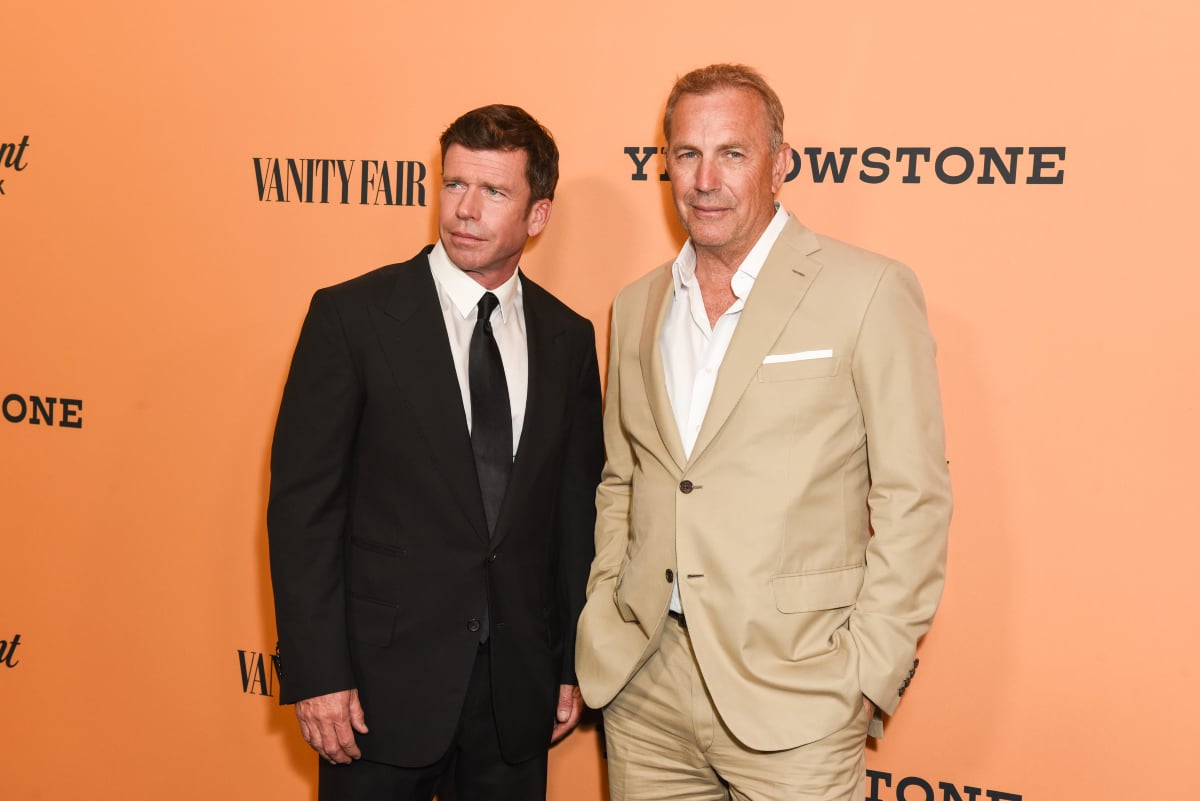
In one of Hollywood’s most seismic talent moves of the decade, Taylor Sheridan—the creative mastermind behind Yellowstone, 1923, Tulsa King, and virtually the entire Paramount+ western empire—is departing Paramount for NBCUniversal in a groundbreaking deal worth over $1 billion. While Sheridan’s television work will remain with Paramount through the end of 2028, his five-year NBCUniversal contract officially begins January 1, 2029, marking a dramatic shift in the streaming wars and raising questions about the future of the Yellowstone universe.
Sources
The $1 Billion Deal: Breaking Down the Numbers
According to sources cited by Deadline and TheWrap, Sheridan’s unprecedented NBCUniversal agreement could reach the $1 billion territory, encompassing creator/executive producer fees, writer compensation, and backend profits. The deal is contingent on Sheridan developing and producing 20 new series for NBC and Peacock over the five-year television contract period beginning in January 2029. However, his film deal with NBCUniversal starts much earlier—launching in March 2026 and running for eight years, allowing him to produce theatrical releases for Universal Pictures and Focus Features while still fulfilling his Paramount television obligations.
This represents a massive increase from Sheridan’s previous Paramount deal, which was estimated at around $200 million. The financial windfall reflects Sheridan’s unparalleled value as one of television’s most prolific and commercially successful creators. Since Yellowstone debuted in 2018, Sheridan has created twelve hit series for Paramount, including 1883, 1923, Tulsa King (starring Sylvester Stallone), Special Ops: Lioness, Mayor of Kingstown, and his latest release, Landman. These shows have become the backbone of Paramount+ and the Paramount Network, attracting millions of subscribers and generating substantial revenue.
How Donna Langley Sealed the Deal
The key architect of Sheridan’s move to NBCUniversal was Donna Langley, Chairman of NBCUniversal Entertainment and Studios, who personally flew to Sheridan’s ranch in Weatherford, Texas, on multiple occasions to build a relationship with the notoriously private creator. According to sources quoted by TheWrap, Langley “offered him the chance to be the Big Fish,” spending quality time with Sheridan at his Texas ranch and focusing on what mattered to him personally and creatively.
Langley’s courting of Sheridan began when discussions arose about his expiring film contract with Paramount in March 2026. As negotiations progressed, Langley proposed that Sheridan consider moving his entire television operation once his Paramount contract concluded at the end of 2028. The timing proved strategic, as Langley’s recent promotion gave her oversight of all entertainment programming and marketing across NBCUniversal’s platforms, including Peacock, Bravo, and NBC. Her pitch emphasized creative freedom and the opportunity for Sheridan to develop entirely new intellectual properties without the corporate constraints he faced at Paramount.
What Stays at Paramount—And What’s Moving
Paramount will retain ownership of all existing Sheridan franchises, including the entire Yellowstone universe and its spinoffs. This means that current series like 1923 (starring Harrison Ford and Helen Mirren), Tulsa King, Lioness, Mayor of Kingstown, and Landman will remain on Paramount+ and continue to stream there for the foreseeable future. Sheridan also has several new Yellowstone spinoffs in development for Paramount, including Dutton Ranch (following Beth and Rip, with Annette Bening and Ed Harris joining the cast), The Madison (starring Michelle Pfeiffer, Matthew Fox, and Patrick J. Adams), Y: Marshals (focusing on Kayce Dutton joining the U.S. Marshals), and 1944, another historical prequel in the vein of 1883 and 1923.
However, any new intellectual properties Sheridan develops after his Paramount contract expires will belong to NBCUniversal. Entertainment Weekly confirmed that Sheridan will need to create entirely new shows, characters, and universes for Peacock and NBC—he cannot bring the Yellowstone franchise or any existing Paramount properties with him. This creates an intriguing challenge: Can Sheridan replicate his Paramount success at a new studio, or was the Yellowstone universe a once-in-a-generation phenomenon?
Why Sheridan Left: The Paramount Tensions
Multiple sources suggest that Sheridan’s departure wasn’t solely about money—personal and professional tensions played a significant role. Following Skydance’s acquisition of Paramount in August 2025, new CEO David Ellison implemented sweeping changes, including the exits of key Sheridan allies Chris McCarthy (co-CEO of Paramount Global) and Keyes Hill-Edgar (COO of Media Networks). Both executives had granted Sheridan considerable creative autonomy and budgetary control, allowing him to operate with minimal oversight.
Deadline reported that Sheridan sensed tension from Paramount’s television executives, particularly Cindy Holland (who oversees Paramount+) and Dana Goldberg (head of Paramount TV Studios). Meanwhile, competitors courted Sheridan aggressively. Warner Bros. Discovery CEO David Zaslav even gifted Sheridan cowboy boots previously worn by James Dean in a film, demonstrating the lengths rivals would go to secure his services. The Hollywood Reporter suggested that Ellison and Sheridan may have experienced a “this streaming service isn’t big enough for both of us” moment, with Ellison uncomfortable with Sheridan’s level of influence and Sheridan feeling slighted by his treatment under the new regime.
The Future of Yellowstone Without Sheridan
The most pressing question for fans is: What happens to Yellowstone and its expanding universe once Sheridan departs? According to Puck and other outlets, it remains unclear whether Paramount will continue producing new spinoffs after Sheridan leaves. CEO David Ellison could theoretically continue making Yellowstone content without Sheridan’s direct involvement, but the show’s DNA is so intrinsically tied to Sheridan’s vision that many industry observers question whether it could maintain quality and audience appeal without him.
Screen Rant noted that Sheridan’s departure raises existential questions about the franchise’s longevity. While Paramount owns the intellectual property, Sheridan’s writing, showrunning, and creative oversight have been integral to every successful Yellowstone project. The upcoming spinoffs will serve as a crucial test—if they succeed without Sheridan’s day-to-day involvement, Paramount may feel confident continuing the universe indefinitely. If they falter, it could mark the end of one of television’s most lucrative franchises.
Industry Impact and the Streaming Wars
Sheridan’s move represents one of the most significant talent acquisitions since the Peak TV era, when media companies competed for mega-deals with showrunners like Shonda Rhimes (who moved from ABC to Netflix for $300 million), Ryan Murphy (who left Fox for Netflix in a $300 million deal), and J.J. Abrams (who signed with WarnerMedia for $250 million). However, unlike those deals, which were signed during Peak TV’s height, Sheridan’s NBCUniversal contract comes during a period of industry contraction, making the $1 billion price tag even more remarkable.
For NBCUniversal and Peacock, landing Sheridan is a massive coup that could fundamentally alter the streaming landscape. Peacock has struggled to compete with Netflix, Disney+, and even Paramount+ in terms of subscriber growth and original content recognition. Acquiring television’s most commercially successful creator gives Peacock instant credibility and the potential for multiple hit franchises. For Paramount, losing Sheridan is a devastating blow—he was not just a creator but the architect of their entire streaming strategy. Company executives have repeatedly cited his shows as a “cornerstone” of Paramount+, making his departure a crisis-level event.
What’s Next for Sheridan and NBCUniversal
While Sheridan won’t debut new television content for NBCUniversal until 2029, his film slate will begin much sooner. Starting in March 2026, he’ll produce theatrical releases for Universal Pictures, potentially including westerns, crime thrillers, and other genres that have defined his career. Films like Sicario, Hell or High Water, and Wind River established Sheridan as one of Hollywood’s most talented screenwriters and directors before he pivoted to television.
When his television deal begins in 2029, industry observers will watch closely to see whether Sheridan can replicate his Paramount success. Will he create another western empire, or will he pivot to entirely different genres? Can he develop 20 new series in five years while maintaining the quality that made Yellowstone a cultural phenomenon? And most importantly, will audiences follow him to Peacock, or will they remain loyal to his existing Paramount properties? These questions will shape the next chapter of Sheridan’s career—and potentially determine the future balance of power in the streaming wars.
