
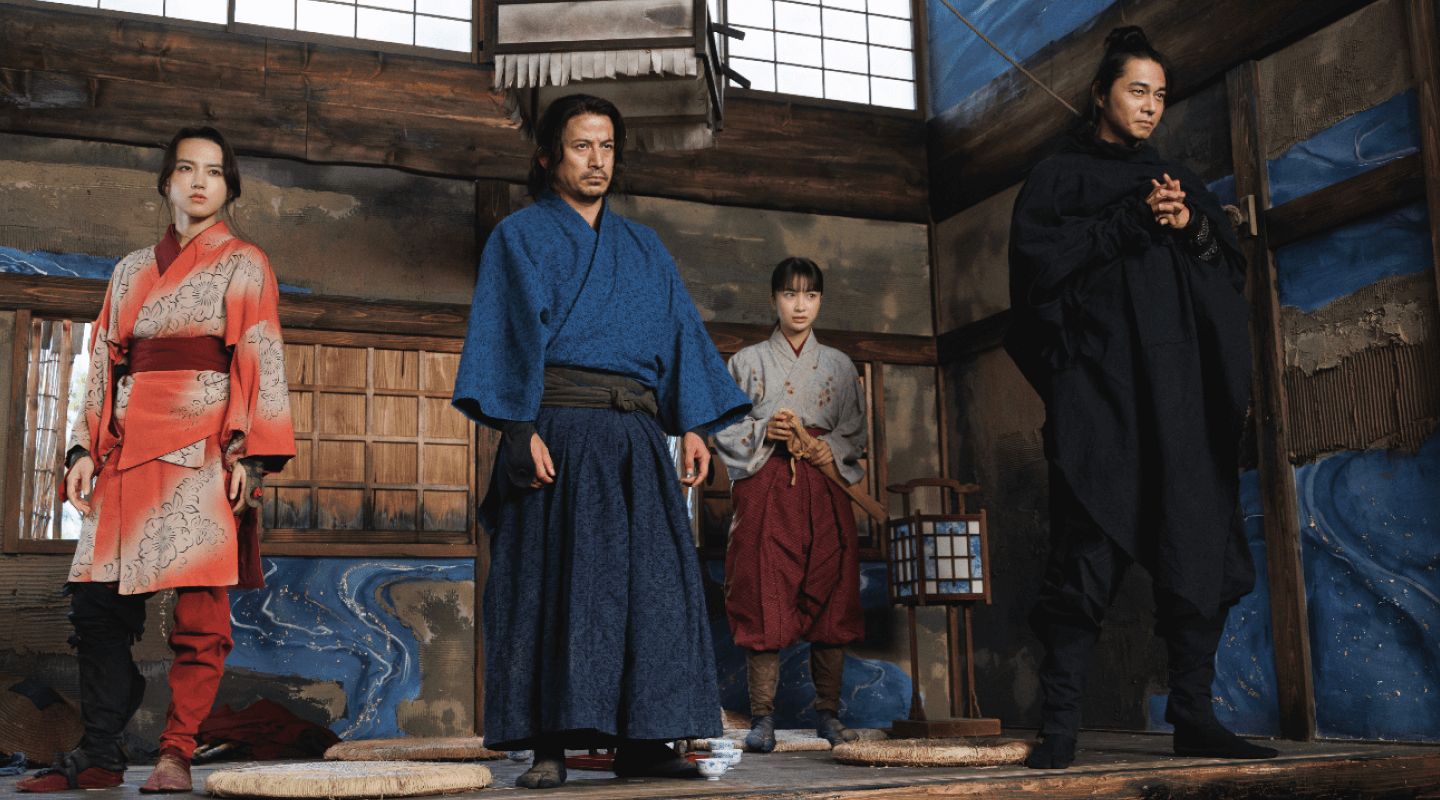
Last Samurai Standing, Netflix’s ambitious Japanese period drama adapted from Shōgo Imamura’s acclaimed novel Ikusagami, premiered globally on November 13, 2025, delivering a visceral battle royale that reimagines the samurai era as an unflinching survival narrative where 292 destitute warriors compete in a deadly game called Kodoku to save their families. Directed by Michihito Fujii and featuring a stellar ensemble led by Junichi Okada (who also serves as producer and action choreographer) as Shujiro Saga, the six-episode series blends historical authenticity with contemporary action sensibility, drawing comparisons to Shogun meets Squid Game. The Week’s review awarded the series 4/5 stars, praising the cinematography and character depth, while IMDb users gave it a 6.1/10, suggesting critical acclaim slightly exceeds audience reception. The production represents Netflix Japan’s most ambitious live-action undertaking, filmed across Kyoto without digital effects assistance during overnight sequences, establishing Last Samurai Standing as a watershed moment for international samurai storytelling and Japanese prestige television.
Plot and Premise: Battle Royale in the Samurai Era
Set in 1878 during Japan’s Meiji era, Last Samurai Standing follows 292 destitute samurai—rendered obsolete by modernization, desperate from poverty, and ravaged by cholera—who are lured into a brutal survival competition called Kodoku. Participants are given wooden tags and told that the sole survivor reaching Tokyo will claim a 100-billion-yen prize. The narrative begins at Tenryu-ji Temple in Kyoto with an expansive, overnight battle royale featuring all 292 actors and stunt performers filmed without digital effects assistance.
Protagonist Shujiro Saga enters the competition specifically to save his ailing wife and son suffering from cholera. However, as the warriors progress across the landscape toward Tokyo, the game reveals itself to be far more complex than simple elimination—involving alliances, betrayals, moral dilemmas, and existential questions about honor, survival, and what it means to be a samurai in a world that no longer needs them.
Cast and Characters
Junichi Okada as Shujiro Saga (Lead/Producer/Choreographer): Okada dominates the ensemble as the stoic, emotionally restrained protagonist. Functioning simultaneously as star, creative producer, and action choreographer, Okada brings authentic physicality to sword sequences while conveying profound emotional restraint. Okada, a Brazil jujitsu black belt, choreographed all sword fights to feel grounded and personally motivated rather than choreographed spectacle. His performance represents one of contemporary Japanese cinema’s finest character studies—a warrior stripped of purpose seeking redemption through sacrifice.
Masahiro Higashide as Kyojin Tsuge: The Week specifically praised Higashide’s portrayal of one of the series’ most compelling characters—a clever, morally ambiguous warrior capable of disguise and deception. Higashide delivers a career-defining supporting performance as the unpredictable, charismatic manipulator.
Hiroshi Abe (Special Appearance): The acclaimed actor (Thermae Romae, Still Walking) anchors emotional moments as General Shigekatsu Oura, a conflicted warrior embodying samurai tradition’s death knell. Abe brings gravitas and introspection to the narrative’s moral questions.
Supporting Ensemble: Yumia Fujisaki, Kaya Kiyohara, Hideaki Itō (Age of Samurai: Battle for Japan), Kazunari Ninomiya (Arashi member), Takayuki Yamada, Shōta Sometani, Taichi Saotome, Hiroshi Tamaki, and Riho Yoshioka create a dense ensemble where female characters receive unprecedented complexity and agency within samurai storytelling traditions.
Director and Creative Team
Director: Michihito Fujii | Co-Directors: Kento Yamaguchi, Toru Yamamoto | Previous Work (Fujii): The Journalist, A Family, Hard Days (2023) with Okada | Recognition: Fujii is a Japan Academy Prize winner with previous collaborative history with Okada dating to 2023’s Hard Days
Michihito Fujii brings grounded realism and emotional depth to the narrative, approaching the samurai tale as contemporary allegory. Reading Imamura’s novel during COVID-19, Fujii recognized resonances with pandemic-era experiences of uncertainty, loss of livelihood, and existential meaning-making. His directorial sensibility prioritizes character introspection and moral complexity alongside visceral action sequences.
Source Material: Based on Shōgo Imamura’s novel Ikusagami (Naoki Prize-winning author) | Screenwriter: Michihito Fujii and collaborators | Cinematography: Keisuke Imamura and Hiroki Yamada | Music: Takashi Ohmama with Vienna Synchron Orchestra conducting
Critical Reception and Ratings
The Week Review: 4/5 stars | IMDb User Rating: 6.1/10 (978 ratings) | Critical Consensus: Praised for ambitious scale, emotional depth, and character complexity | Comparative References: “Shogun meets Squid Game” – blending historical authenticity with survival game narrative mechanics
The Week Assessment: “Netflix’s impressive new Japanese drama… Directors Michihito Fujii, Kento Yamaguchi, and Toru Yamamoto blend historical authenticity with emotional depth. The combat scenes are visceral and personal — every duel feels like a moral decision, not just a spectacle. Combined with haunting cinematography and layered character arcs, Last Samurai Standing trades the polished heroism of classic samurai tales for something raw, unpredictable, and deeply human.”
Variety Assessment: Praised the show’s “scale, emotion, and Japanese sensibility” while noting Okada’s multi-role commitment brought unprecedented realism to period action sequences. Critics highlighted the overnight melee’s filming as historically significant—hundreds of actors and stunt performers creating authentic battle sequences without digital enhancement.
Release Information and Production Details
Platform: Netflix (exclusive global streaming) | Release Date: November 13, 2025 | Episode Count: 6 episodes (all released simultaneously) | Runtime Per Episode: Approximately 50 minutes | Original Language: Japanese | Filming Location: Kyoto, Japan | MPAA Rating: TV-MA
Production Timeline: Netflix Japan began development in December 2022. Junichi Okada received the proposal from Netflix Japan’s live-action creative director Shinichi Takahashi and subsequently enlisted director Michihito Fujii. Principal photography occurred across 2024-2025. The production represents Netflix Japan’s most ambitious live-action undertaking to date.
Production Philosophy: According to Okada and Fujii, the production aimed to “reconceptualize” traditional historical drama by infusing samurai narratives with authentic emotion, global sensibility, and contemporary action filmmaking without compromising Japanese cultural specificity. The series demonstrates that Japanese prestige television can compete with international productions while maintaining cultural authenticity.
Where to Watch
Streaming Platform: Netflix (exclusive) | Availability: November 13, 2025 (worldwide release) | All Episodes: All six episodes available simultaneously on premiere date | Subscription Required: Netflix membership (plans start at $7.99/month with ads)
Last Samurai Standing is exclusively available on Netflix globally. All six episodes premiered simultaneously on November 13, 2025, allowing viewers to experience the complete narrative arc without waiting between releases.
Series Future and Renewal Status
Season 2 Status: Netflix has not officially announced renewal at this time | Narrative Completeness: The six-episode first season presents a complete narrative arc adaptable to either standalone status or multi-season continuation | Source Material Availability: Based on Shōgo Imamura’s singular novel, providing inherent narrative conclusion, though Okada and Fujii have indicated creative capacity to expand universe if Netflix greenlight occurs
While Netflix typically gauges renewal interest following opening weekend viewership and critical reception, Last Samurai Standing‘s narrative structure—centered on the Kodoku competition and Shujiro Saga’s personal journey—offers thematic completion. However, the world-building establishes sufficient creative foundation for potential multi-season expansion exploring additional samurai backstories, era-specific conflicts, or alternate tournament structures.
Junichi Okada stated in Variety that the production represented “a fresh type of period piece, one that also encompasses action elements” specifically crafted for global audiences—suggesting intentional world-building suitable for franchise expansion if Netflix determines commercial viability warrants continuation. The series’ ambitious scale, international cast appeal, and production values position it favorably within Netflix’s prestige drama hierarchy, potentially influencing renewal considerations alongside viewership metrics.
