
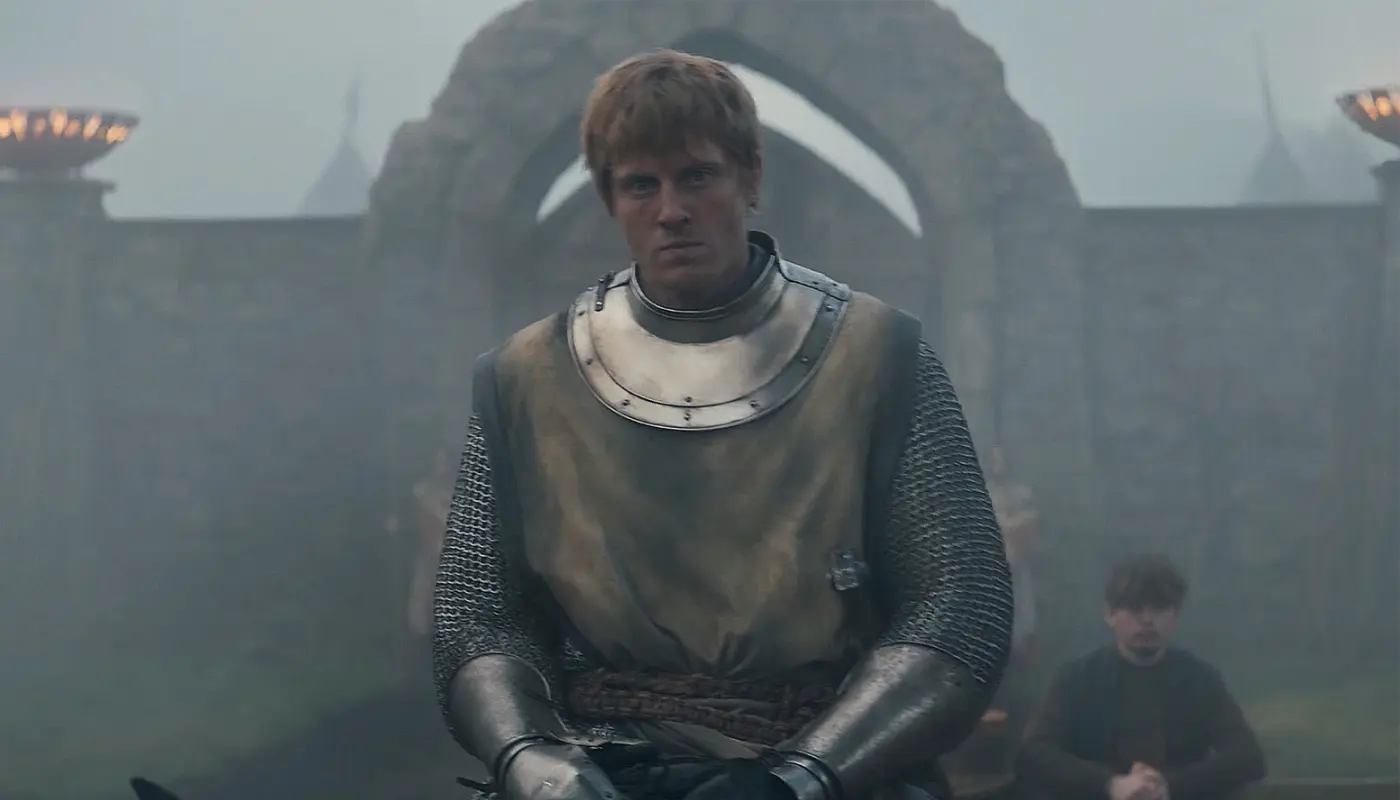
Episode 5 of A Knight of the Seven Kingdoms deepens the emotional and political stakes of the season, delivering a chapter that feels both intimate and epic. As alliances tighten and rivalries sharpen, the series continues to prove why stories set in the world of Game of Thrones remain so compelling. With its focus on personal honor, quiet courage, and the fragile nature of power, Episode 5 offers a rich, character-driven hour that lingers long after the credits roll.
A Turning Point in Dunk and Egg’s Journey
At the heart of the series is the bond between Ser Duncan the Tall (Dunk) and his young squire, Egg. Episode 5 places their relationship under significant strain as the realities of knighthood clash with the romantic ideals that first drew Dunk to the path of chivalry.
Without venturing into spoiler-heavy territory too quickly, Episode 5 centers on a confrontation that forces Dunk to question his understanding of honor. A dispute that initially appears minor evolves into a larger conflict involving regional lords and simmering resentments. Dunk’s decision-making reveals both his strengths and his vulnerabilities — he is brave and compassionate, but not always politically savvy.
Egg, meanwhile, continues to grow into his own. His sharp intelligence and quiet confidence stand in contrast to Dunk’s straightforward worldview. Their dynamic is evolving; Egg is no longer just a wide-eyed observer but an active participant in shaping events. This shift in their relationship gives Episode 5 emotional weight. Viewers are reminded that knighthood in Westeros is as much about moral compromise as it is about swordplay.
The Main Event: The Trial of Seven
The episode opens with the tension of a ticking clock. The trial is no longer a looming threat; it is a physical reality. Ser Duncan (played by the towering Peter Claffey) must field a team of seven to face Prince Aerion’s champions.
The Lineup of Heroes
To the shock of the Ashford tourney crowd, Dunk manages to assemble a diverse, if untested, group:
They face a terrifying opposition: Prince Maekar, Prince Aerion, Prince Daeron, and three members of the Kingsguard. The rules are simple but brutal: if Dunk yields or dies, he is guilty. If his team survives, he is cleared.
The Narrative Gamble: The Flea Bottom Flashback
Just as the lances are lowered and the horses charge, the episode does something radical. It cuts to black. We are transported back years, to the “shadowy wynds” of King’s Landing, where we meet a teenage Dunk (Bamber Todd).
Dunk of Flea Bottom
This isn’t the noble Ser Duncan we know. This is a starving orphan scavenging a battlefield for teeth and scrap metal. Through this extended flashback, we see the foundation of Dunk’s character:
This sequence explains the episode’s title. In Westerosi theology, The Mother represents mercy and protection of the innocent. Young Dunk was a child who needed a mother; instead, he found a Hedge Knight, and in doing so, he became the protector he never had.
The Climax: “Yield, or Die”
When we return to the present, the Trial of Seven is a chaotic, mud-soaked nightmare. Owen Harris uses a “helmet-cam” perspective (affectionately dubbed “Dunk-O-Vision” by fans) to convey the claustrophobia of medieval combat.
The Duel with Aerion
Dunk is quickly unhorsed and impaled by a lance. On the ground, he is no match for the trained, elegant strikes of Prince Aerion (Finn Bennett). But as the disembodied voice of Ser Arlan echoes in his head—”Get up, you lunk, always hit ‘em back”—Dunk stops trying to be a “Ser” and starts being a “Flea Bottom brawler.”
He tackles Aerion into the mud, using his size and raw strength to overpower the prince. In a visceral finale, Dunk pins Aerion down and beats his dragon-crested helmet until the Prince finally shrieks, “I yield! I withdraw the accusation!”
The Expanding Political Landscape of Westeros
Episode 5 broadens the political scope of the series. While A Knight of the Seven Kingdoms is more intimate in tone than House of the Dragon, the undercurrents of power are no less potent.
Several noble houses are maneuvering behind the scenes, and Episode 5 reveals how seemingly minor disputes can spark wider unrest. The episode underscores a key theme of the franchise: power is never stable. It must constantly be negotiated, defended, and sometimes seized.
We see how local feuds intersect with larger dynastic tensions. Conversations in candlelit halls carry as much tension as any battlefield. The writing leans heavily into subtext, rewarding attentive viewers who notice what’s left unsaid as much as what is spoken aloud.
Key Episode 5 Highlights (Spoiler Warning)
If you haven’t watched Episode 5 yet, consider this your cue to bookmark this page and return after viewing.
1. A Duel That Redefines Loyalty
A climactic duel stands out as one of the season’s most gripping sequences so far. Unlike the grand spectacle of previous Westerosi battles, this fight feels raw and personal. Every strike carries emotional consequences, not just physical risk.
The duel forces characters to choose sides, exposing fractures in alliances that once seemed unshakable. It’s a reminder that in Westeros, loyalty can be both a virtue and a liability.
2. A Shocking Revelation
Midway through the episode, a revelation about a character’s lineage reframes earlier events. The reveal is handled with restraint, allowing the audience to process its implications without melodrama.
In classic Westeros fashion, bloodlines matter — sometimes more than honor or intention.
3. Egg Steps Forward
Egg takes a bold step that signals his emerging leadership. His decision is strategic rather than impulsive, hinting at the ruler he may one day become. The contrast between Dunk’s instinct-driven approach and Egg’s calculated thinking becomes more pronounced here.
Themes: Honor vs. Survival
Episode 5 leans heavily into the central tension between honor and survival. Dunk’s belief in knightly virtue is admirable, but the episode questions whether such ideals can truly survive in a world defined by political intrigue.
The show continues to explore what it means to be a “true knight.” Is it about following a code without compromise? Or is it about adapting to circumstances to protect the greater good?
This moral ambiguity is one of the reasons audiences remain drawn to stories set in this universe. The characters feel human — flawed, conflicted, and shaped by their environment.
Production, Performances, and Atmosphere
Visually, Episode 5 maintains the grounded aesthetic that distinguishes A Knight of the Seven Kingdoms from its predecessors. The focus is less on dragons and spectacle and more on earthy realism: dusty roads, modest halls, and quiet countryside tension.
The performances are particularly strong this week. The actors portraying Dunk and Egg deliver nuanced portrayals that elevate the script. Small gestures — a hesitant glance, a tightened jaw — communicate as much as grand speeches.
The pacing is deliberate but purposeful. Rather than rushing toward climactic action, the episode allows tension to simmer. This patience pays off in the final act, where emotional and narrative threads converge.
How Episode 5 Connects to the Larger Westeros Canon
For longtime fans of the franchise, Episode 5 includes subtle nods to broader Targaryen history. These references never overwhelm the narrative but enrich it, situating Dunk and Egg’s journey within a larger tapestry.
The series continues to carve out its own identity while honoring the legacy of Game of Thrones. Where that series often centered on grand power struggles, A Knight of the Seven Kingdoms zooms in on individual morality.
Episode 5 exemplifies this balance: intimate yet consequential.
Final Thoughts
There’s something refreshingly restrained about this episode. In an era where many fantasy series rely heavily on spectacle, A Knight of the Seven Kingdoms trusts its characters and dialogue. Episode 5 reminds viewers why they fell in love with this universe in the first place: layered personalities, moral gray areas, and the constant interplay between destiny and choice.
It’s not just about who wins a fight. It’s about who they become in the process.
