
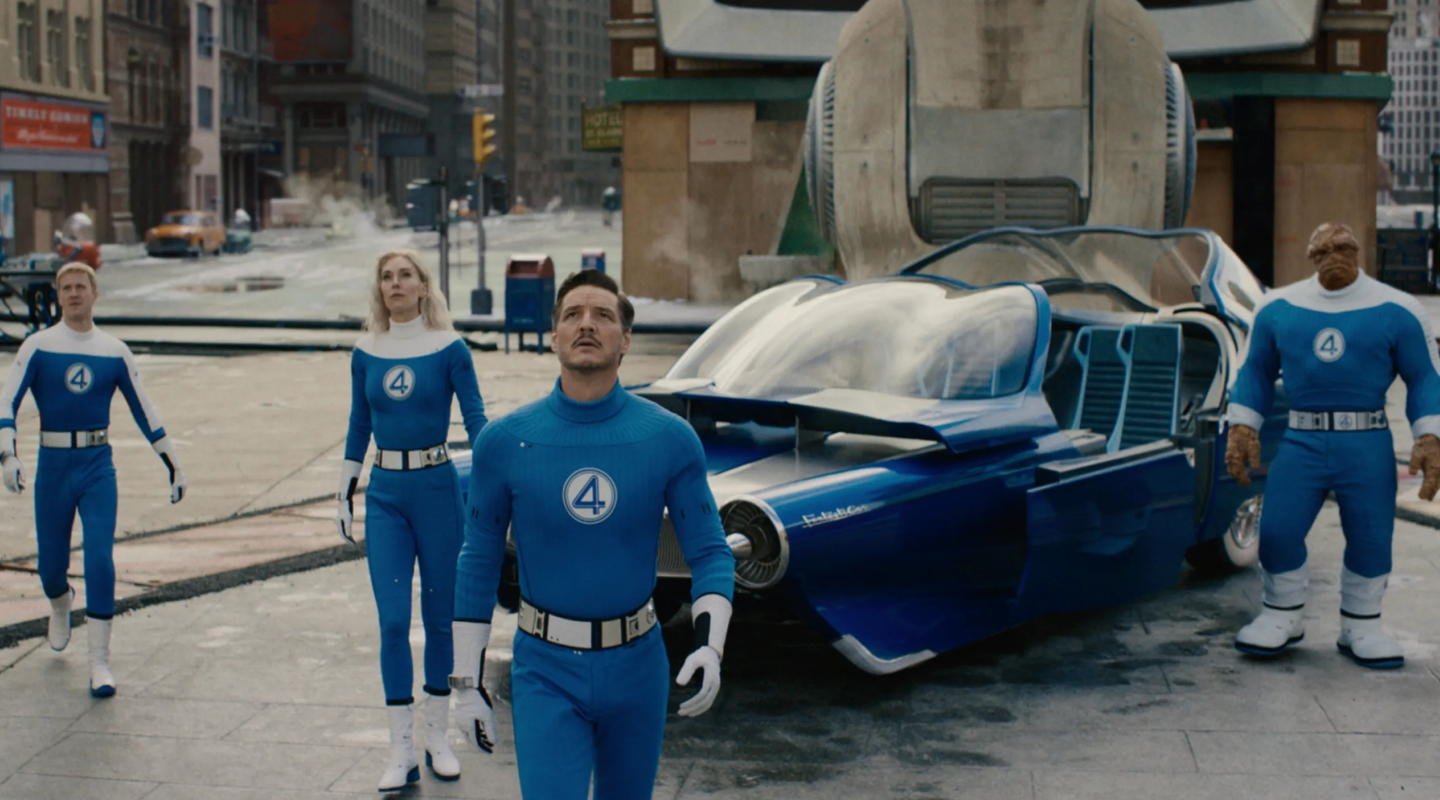
The Fantastic Four: First Steps achieved qualified box office success—earning $521.9 million worldwide and becoming the highest-grossing film featuring a new MCU character since 2019’s Endgame, surpassing Shang-Chi and the Legend of the Ten Rings‘ $432 million total. However, despite this commercial milestone, the film underperformed relative to its $200 million production budget and established MCU standards, particularly in international markets where it collected only $247.6 million (47.4% of worldwide total)—a notably weak performance reflecting both the Fantastic Four franchise’s troubled history and contemporary superhero market fatigue. The film opened domestically with a robust $117.6 million opening weekend and climbed to $274.3 million domestically (52.6% of worldwide), yet fell short of projections suggesting the $200 million budget film should have grossed $600 million+ to justify its production costs and Marvel’s strategic positioning. The film’s success is contextual—it represents vindication for a franchise that has suffered through multiple critically reviled adaptations, yet simultaneously demonstrates the MCU’s diminishing commercial dominance and the industry-wide challenge of launching new superhero teams amid superhero fatigue. Director Matt Shakman and screenwriter Josh Fall crafted a critically acclaimed film (86-88% Rotten Tomatoes Certified Fresh, A- CinemaScore), featuring Pedro Pascal as Mister Fantastic, Vanessa Kirby as Invisible Woman, Ebon Moss-Bachrach as The Thing, and Joseph Quinn as Human Torch, anchored by a retro-futuristic 1960s aesthetic that audiences praised as visually distinctive. Yet critical and audience enthusiasm failed to translate into sustained international box office performance, with the film earning merely $4.5 million from China (compared to Superman’s $6.6 million same weekend), establishing the project as a qualified but financially constrained commercial success requiring sustained theatrical run and home video/streaming revenue to achieve profitability.
Box Office Overview: Qualified Success with Caveats
Worldwide Gross: $521.9 million | Domestic (US/Canada): $274.3 million (52.6%) | International: $247.6 million (47.4%) | Production Budget: $200 million | Opening Weekend Worldwide: $218 million ($118M domestic, $100M international) | Financial Status: Qualified success; 2.6x budget multiplier (break-even requires 2.5-2.7x)
The Fantastic Four: First Steps achieved box office viability by reaching $521.9 million worldwide, technically surpassing the 2.5x production budget multiplier industry standard for break-even profitability. However, this assessment requires nuance: the film earned only 2.6x its production budget—barely clearing profitability thresholds when accounting for global marketing expenses estimated at $100-150 million. Industry analysis suggests the film likely generated modest profit margins ($20-50 million) rather than the substantial profit majorities expected from Marvel Studios tentpoles.
Opening Weekend Performance Analysis: The $118 million domestic opening weekend represented strong initial reception, slightly exceeding pre-release projections of $100-110 million. Internationally, the $100 million opening weekend proved respectable but underwhelming compared to previous Marvel benchmarks. The combined $218 million opening weekend positioned First Steps as the year’s fourth-largest domestic opening (behind Deadpool & Wolverine, Inside Out 2, and Superman).
Cast and Characters: A Stellar Ensemble with Strong Chemistry
Pedro Pascal as Mister Fantastic (Reed Richards): The Oscar Isaac-in-Ex Machina aesthetic: intellectual, emotionally vulnerable protagonist. Pascal brings gravitas and accessibility to the genius scientist, avoiding typical superhero arrogance through genuine warmth and father-figure authority grounded in emotional authenticity.
Vanessa Kirby as Invisible Woman (Sue Storm): Critics universally identified Kirby as the ensemble’s standout performer. TheWrap’s William Bibbiani observed: “Each cast member shines, but Vanessa Kirby is the standout. She commands every scene with intelligence, warmth, and power.” Her portrayal transforms Sue Storm from typical superhero love interest into genuine team co-leader with equal narrative weight and emotional complexity.
Ebon Moss-Bachrach as The Thing (Ben Grimm): The character’s inherent tragedy—physical transformation removing human identity—demands emotional vulnerability Moss-Bachrach delivers powerfully. His blue-rock appearance, rendered through CGI, surprisingly conveys genuine emotional authenticity beneath genre spectacle.
Joseph Quinn as Human Torch (Johnny Storm): Quinn provides comedic relief without sacrificing dramatic weight. The casting reunites Quinn with Kirby (both Netflix Stranger Things alumni), creating genuine off-screen chemistry visible on screen.
Supporting Cast: Ralph Ineson, Julia Garner, John Malkovich, and Paul Walter Hauser round out the ensemble, with Malkovich’s Galactus Herald representing the film’s primary antagonistic force.
Director and Screenwriter: Matt Shakman’s Vision
Director: Matt Shakman | Previous Work: WandaVision (Emmy-nominated), Parks and Recreation (Emmy-nominated), The Shrink Next Door | Screenwriter: Josh Fall | Visual Style: Retro-futuristic 1960s aesthetic (Mad Men meets Tomorrowland with Marvel twist) | Narrative Approach: Character-driven action sequences emphasizing family bonds over spectacle
Matt Shakman’s directorial approach fundamentally distinguished First Steps from typical MCU formula. His WandaVision experience managing intimate character drama within superhero spectacle translated into a film prioritizing emotional authenticity over action mechanics. The aesthetic choice—retro-futuristic 1960s production design—provided visual distinctiveness unavailable in standard MCU entries, with critics praising the “visually distinctive retro-futuristic feast, dripping with 1960s-inspired style.”
Screenwriter Josh Fall structured the narrative emphasizing family dynamics and character relationships over action sequences. Rather than allowing combat to define story progression, Fall constructed action scenes demonstrating how familial bonds and mutual understanding inform tactical decisions. As critics noted: “Each battle is choreographed to show off not just abilities, but how they complement each other.”
Critical Reception: Certified Fresh Success
Rotten Tomatoes: 86-88% Certified Fresh (130+ reviews) | IMDB Rating: 7.4/10 | CinemaScore: A- | Historical Significance: First Fantastic Four film to achieve Certified Fresh status; all previous FF films rated Rotten | Comparative MCU Performance: Ranks among best-reviewed MCU films of past three years
Critical Consensus Summary: Critics celebrated First Steps as a genuine breakthrough for the historically troubled Fantastic Four franchise. The achievement of Certified Fresh status—the first Fantastic Four film to accomplish this—represented vindication for a character team that previously suffered exclusively unfavorable critical reception.
Positive Critical Elements:
– Stellar ensemble cast with exceptional chemistry (particularly Kirby, Pascal)
– Visually distinctive retro-futuristic 1960s aesthetic differentiating from typical MCU formula
– Character-driven narrative prioritizing family bonds over action mechanics
– Action sequences choreographed to demonstrate character complementarity and relationships
– Production design and cinematography earning praise for visual sophistication
Critical Reservations:
– Script feels like “soulless math equation” by committee (generic Marvel formula + 60s aesthetics = profit)
– Character interaction scenes function as narrative checklist rather than organic moments
– Some VFX sequences feel “undercooked” or rushed
– Narrative structure skips origin story (choosing self-contained approach), potentially alienating audiences unfamiliar with Fantastic Four
International Box Office Weakness: A Significant Liability
International Total: $247.6 million (47.4% of worldwide) | Top Markets: UK ($31.9M), Mexico ($28.8M), France ($16.8M), Brazil ($15.6M), Australia ($11.7M) | China Performance: $5.6 million (notably weak) | Expected Ratio: International typically represents 60% of MCU tentpole earnings
First Steps‘ primary financial liability emerged internationally, where the film collected only 47.4% of worldwide gross—significantly below typical superhero distribution (60% international, 40% domestic). This weakness reflected both the Fantastic Four franchise’s global recognition deficit and broader superhero fatigue affecting international audiences.
China Performance Crisis: The film earned merely $5.6 million from China, compared to Superman’s $6.6 million same period—demonstrating audiences’ dramatic aversion to superhero content regardless of franchise. This represented one of the most significant international underperformances, as China typically represents 8-12% of MCU tentpole earnings.
European Performance: UK ($31.9M), France ($16.8M), and other European markets provided respectable but not exceptional earnings, suggesting the retro-1960s aesthetic maintained stronger appeal in Western markets familiar with the era.
Historical Fantastic Four Box Office Context
2005 Fantastic Four (Tim Story, Ioan Gruffudd): Worldwide: $330.6 million | 2007 Fantastic Four: Rise of the Silver Surfer: Worldwide: $289 million | 2015 Fantastic Four (Josh Trank): Worldwide: $167 million (franchise low; critical and commercial disaster) | 2025 First Steps: $521.9 million (franchise high)
The 2025 First Steps represents the franchise’s best box office performance by significant margin, nearly doubling the 2005 original film’s $330.6 million. This achievement demonstrates Marvel Studios’ superior franchise positioning relative to previous non-MCU adaptations, yet simultaneously reveals that a $200 million budget MCU film in 2025 should comfortably exceed $521.9 million in global earnings.
Profitability Assessment: Technically Profitable but Constrained
Production Budget: $200 million | Estimated Global Marketing: $100-150 million | Total Investment: $300-350 million | Box Office Revenue: $521.9 million | Studio Share (typically 50-55%): $260-287 million | Profitability Projection: Break-even to $20-40 million profit
The Fantastic Four: First Steps technically achieved profitability by earning 2.6x its production budget; however, this financial assessment requires significant qualification. After subtracting estimated global marketing expenses ($100-150 million), the film’s profit margins likely reached only $20-40 million—modest relative to MCU tentpole standards and industry expectations for Marvel Studios projects.
Future Revenue Considerations: Profitability calculations typically exclude home video sales, streaming rights revenue, and ancillary merchandise income. These secondary revenue streams—particularly streaming rights to Disney+—provide additional financial contributions that ultimately determine actual project profitability. Projections suggest the film will ultimately achieve 30-50% net profit margins when including these revenue streams.
Conclusion: Qualified Success Within Industry Context
The Fantastic Four: First Steps achieved qualified box office success by clearing profitability thresholds while garnering Certified Fresh critical reception—a combination that vindicates Marvel Studios’ strategic investment in the franchise despite the historically troubled property. Yet the film’s $521.9 million worldwide gross, while respectable, represents underwhelming performance relative to its $200 million budget and MCU positioning—suggesting that superhero fatigue, the Fantastic Four’s brand recognition deficit, and international market hesitation fundamentally constrained the film’s commercial ceiling.
As MCU output continues its transition toward streaming-first strategies and episodic content, First Steps stands as evidence that theatrical franchise reboots can still achieve modest success through critical credibility and cast excellence—yet financial returns increasingly require supplementary revenue streams beyond theatrical distribution to justify blockbuster production budgets.
