
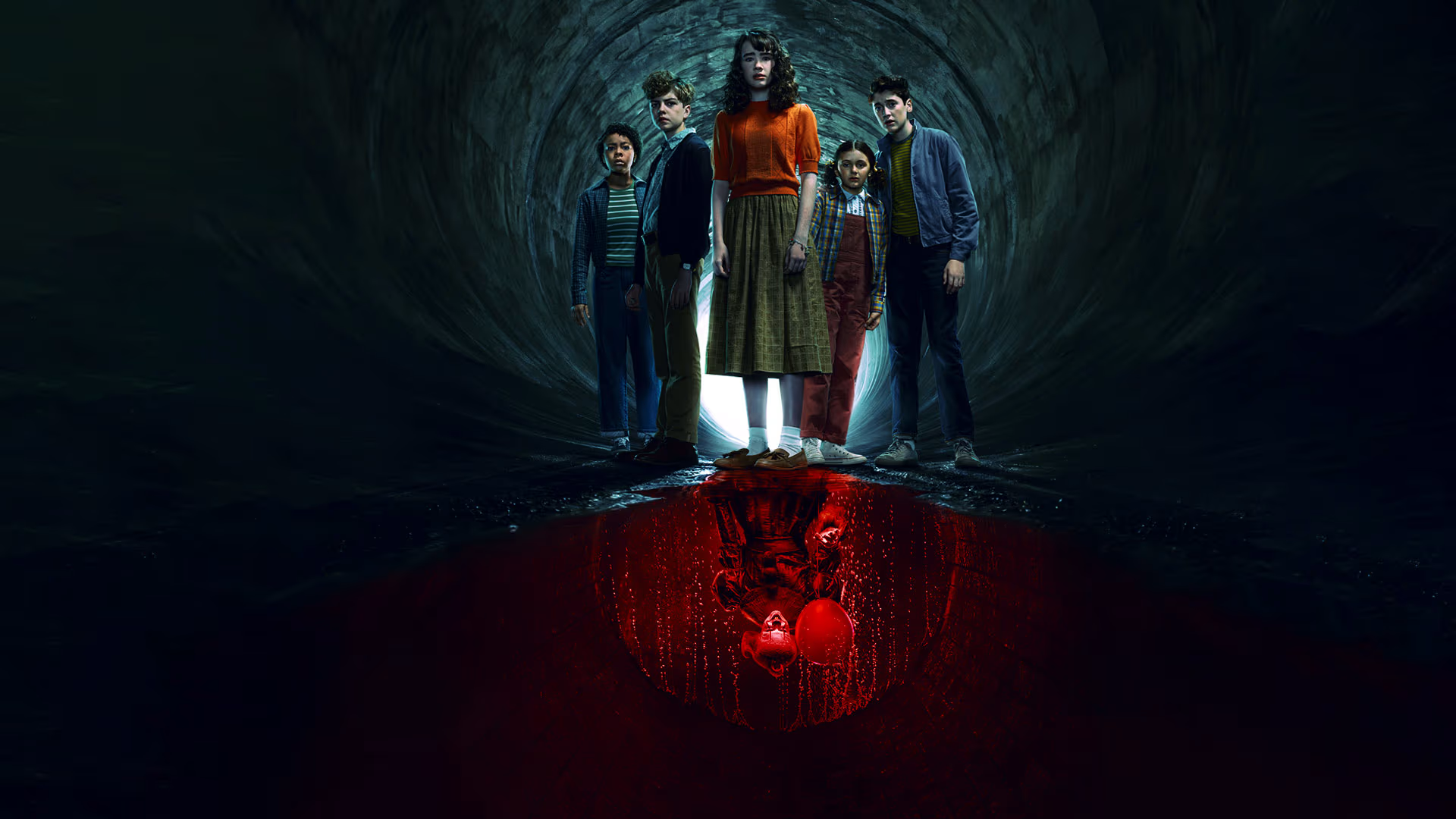
HBO’s highly anticipated prequel series IT: Welcome to Derry is set to debut this Sunday, October 26, 2025, and early reviews are calling it a terrifying triumph that expands the horror universe of Stephen King’s iconic novel. The series, set in 1962 Derry, Maine, serves as a prequel to Andy Muschietti’s 2017 and 2019 IT films, exploring the origins of Pennywise the Clown and the dark history of the town that feeds the entity’s hunger. With a Rotten Tomatoes score of approximately 79-80%, the series has earned “Certified Fresh” status, positioning itself as a worthy entry in the Stephen King adaptation canon and establishing itself as a prestige horror production that audiences should absolutely watch before Halloween.
Critical Acclaim and Reviews
IT: Welcome to Derry has arrived to enthusiastic critical reception ahead of its Sunday debut, earning a Certified Fresh rating on Rotten Tomatoes from 42 critics with a 79% score—placing it just below the 2017 IT film (85%) but well ahead of IT Chapter Two (62%) and the 1990 miniseries (67%). This positions the series as one of the stronger entries in the IT franchise overall, validating HBO’s investment in this ambitious prequel project.
Variety praised the series as “a masterfully woven and terrifying tale about the origins of the monstrous Pennywise the Clown. The show may be set in the past, but its themes have never echoed louder than today.” NME’s James Mottram gave the series four out of five stars, calling it “a precision-tooled prestige horror” that successfully captures the essence of dread when viewers encounter Pennywise’s iconic red balloon for the first time.
Polygon declared Welcome to Derry “the best, scariest It story yet,” while Slashfilm described it as “a total monster mash that should satisfy hungry horror fans.” IGN noted that the premiere “makes you feel right at home in America’s worst small town,” and Decider praised how the series “balances the supernatural and psychological horror that makes Stephen King the GOAT.”
Despite overwhelmingly positive reviews, some critics noted minor reservations. Collider acknowledged that while the series contains “truly surprising turns of events” in the premiere, “the overall dread feels fragmented” across multiple character threads. However, even critics with reservations acknowledged the series’ quality production values and compelling storytelling.
Series Premise and Setting
IT: Welcome to Derry is set in 1962, precisely 27 years before the events depicted in Muschietti’s 2017 IT film. The series explores the previous cycle of Pennywise’s carnage, diving into the town’s dark history and how the entity spreads terror and feeds on the fears of Derry’s inhabitants. Unlike the films, which focused primarily on the Losers Club and their battle against Pennywise, the series expands outward to encompass multiple storylines across different segments of Derry’s population.
The narrative interweaves the arrival of U.S. Air Force officer Leroy Hanlon (Jovan Adepo) and his family at a military base near Derry with the experiences of other townspeople caught in Pennywise’s influence. The series deliberately juxtaposes the supernatural horror of Pennywise with the social horrors embedded within 1960s America—racism, child abuse, corruption, and generational trauma. This approach expands King’s original source material by incorporating the Derry town history chapters from his novel, which readers experienced as interstices between main narrative threads.
The showrunners have revealed ambitious long-term plans for the series. If successful, they envision three seasons total, with Season 2 set in 1935 and Season 3 in 1908, progressively moving backward in 27-year intervals—the supernatural cycle of Pennywise’s emergence. Andy Muschietti hinted that this backwards temporal progression follows a specific narrative reason he cannot yet reveal, suggesting the series has carefully planned mythology behind its structure.
The 1962 setting allows the production to capture mid-century Americana aesthetics while exploring how that era’s particular social anxieties and prejudices create ideal hunting grounds for an entity that feeds on human fear.
Outstanding Cast Performances
Bill Skarsgård reprises his iconic role as Pennywise the Dancing Clown, the interdimensional entity that appears periodically to feed on the fear of Derry’s children. Skarsgård’s haunting performance remains central to the franchise’s appeal, with critics praising how he brings menace and unpredictability to every appearance. The actor also serves as an executive producer on the series, maintaining creative involvement beyond his on-screen work.
Jovan Adepo delivers a powerful performance as Leroy Hanlon, a U.S. Air Force officer navigating both military racism and the supernatural horrors lurking within Derry. Collider specifically praised Adepo’s “strong, grounding presence as a revered military man caught between his duty and a newfound fear for his family.” His character’s journey exploring the intersection of institutional racism and cosmic horror provides much of the series’ dramatic weight.
Taylour Paige portrays Charlotte, Leroy’s wife, bringing emotional depth to a woman confronting stomach-churning revelations about Derry and its supernatural curse. The chemistry between Adepo and Paige anchors the series’ adult narrative, with their storyline providing compelling counterpoint to younger characters’ experiences. Critics specifically noted how their performances strengthen the military-base sequences featuring James Remar’s General Shaw.
The supporting ensemble includes Chris Chalk as Dick Hallorann, James Remar as General Shaw, Stephen Rider, Madeleine Stowe, Rudy Mancuso, and numerous younger performers who navigate the child-centered horror that defines Pennywise’s hunting patterns. The diverse cast reflects contemporary casting sensibilities while exploring how Pennywise’s predation intersects with existing social hierarchies and prejudices.
Andy Muschietti’s Creative Vision
Andy Muschietti, who directed both previous IT films and co-created this series with his sister Barbara Muschietti and screenwriter Jason Fuchs, directed the first four episodes of Welcome to Derry. His directorial vision establishes the series’ visual aesthetic, tone, and thematic focus before handing off to other directors for subsequent episodes. The creative consistency is immediately apparent, with reviewers noting how the series maintains the atmospheric dread and character-focused storytelling that characterized the feature films.
The Muschietti siblings have emphasized their commitment to honoring King’s source material while expanding into unexplored territory. Barbara Muschietti revealed her surprise at HBO’s willingness to support the series’ graphic content. “While we were shooting, I kept thinking, ‘I’m going to get the call’ telling us to cut these scenes. But we kept on presenting these scenes and episodes and they kept on responding and loving them. We’ve been very lucky to have the support from the studio.”
This creative freedom has allowed Muschietti and his team to push boundaries regarding violence, disturbing imagery, and psychological horror. The first episode reportedly includes moments far more disturbing than anything in the theatrical films, demonstrating HBO’s commitment to creating television that matches prestige cinema standards for mature content.
Showrunner Jason Fuchs, alongside Brad Caleb Kane, developed innovative ways to depict Pennywise’s psychological manipulation of new-generation victims. Rather than simply repeating scares from previous iterations, the series explores how the entity adapts its terror tactics to exploit mid-20th-century anxieties, from Cold War paranoia to racial violence to child abuse. This approach maintains freshness while deepening the mythology’s thematic resonance.
Prestige Horror and Shocking Content
IT: Welcome to Derry positions itself as prestige horror, balancing Stephen King’s psychological and social commentary with visceral supernatural scares. The series combines King’s thematic depth—exploring how small-town cruelty, institutional failure, and generational trauma create spiritual sickness within Derry itself—with graphic depictions of violence and disturbing imagery that HBO has greenlit for the series.
Multiple reviewers noted that the series contains shocking content exceeding typical horror television boundaries. The first episode features a scene that reviewers described as going “where not even certain major horror releases (ahem, Blumhouse) would dare to tread.” This willingness to embrace controversial material positions Welcome to Derry as genuinely transgressive horror rather than safe, commercially palatable entertainment.
Chris Chalk, who plays Dick Hallorann, expressed his own surprise at the series’ intensity. “I didn’t understand the complete scope until I saw the show for myself,” he revealed, noting that on-set he couldn’t fully appreciate how disturbing certain sequences would appear once effects, editing, and cinematography were finalized. This disconnect between filming and final product underscores how carefully crafted the horror sequences are.
The series balances graphic violence with psychological horror, exploring how Pennywise extends its influence through atmospheric dread and emotional manipulation. The entity’s visions prey on characters’ vulnerabilities, personal traumas, and deeply rooted fears—creating horror that operates on both visceral and cerebral levels. This multifaceted approach to horror-crafting elevates Welcome to Derry beyond simple jump-scare entertainment into more philosophically complex examination of how evil thrives where communities fail to protect their vulnerable members.
Series Information
Title: IT: Welcome to Derry
Network: HBO / HBO Max
Premiere Date: Sunday, October 26, 2025
Premiere Time: 9/8c on HBO and HBO Max
Setting: 1962 Derry, Maine
Developers: Andy Muschietti, Barbara Muschietti, Jason Fuchs
Director (Episodes 1-4): Andy Muschietti
Showrunners: Jason Fuchs, Brad Caleb Kane
Episodes: 9 episodes (Season 1)
Rotten Tomatoes Score: 79% (Certified Fresh)
Sources: Variety, Rotten Tomatoes, India Today, Collider, IGN, Polygon, Decider, NME, Slashfilm, Screen Rant, Slash Film, ComicBookMovie, Wikipedia, TV Insider, TV Guide, Heaven of Horror
