
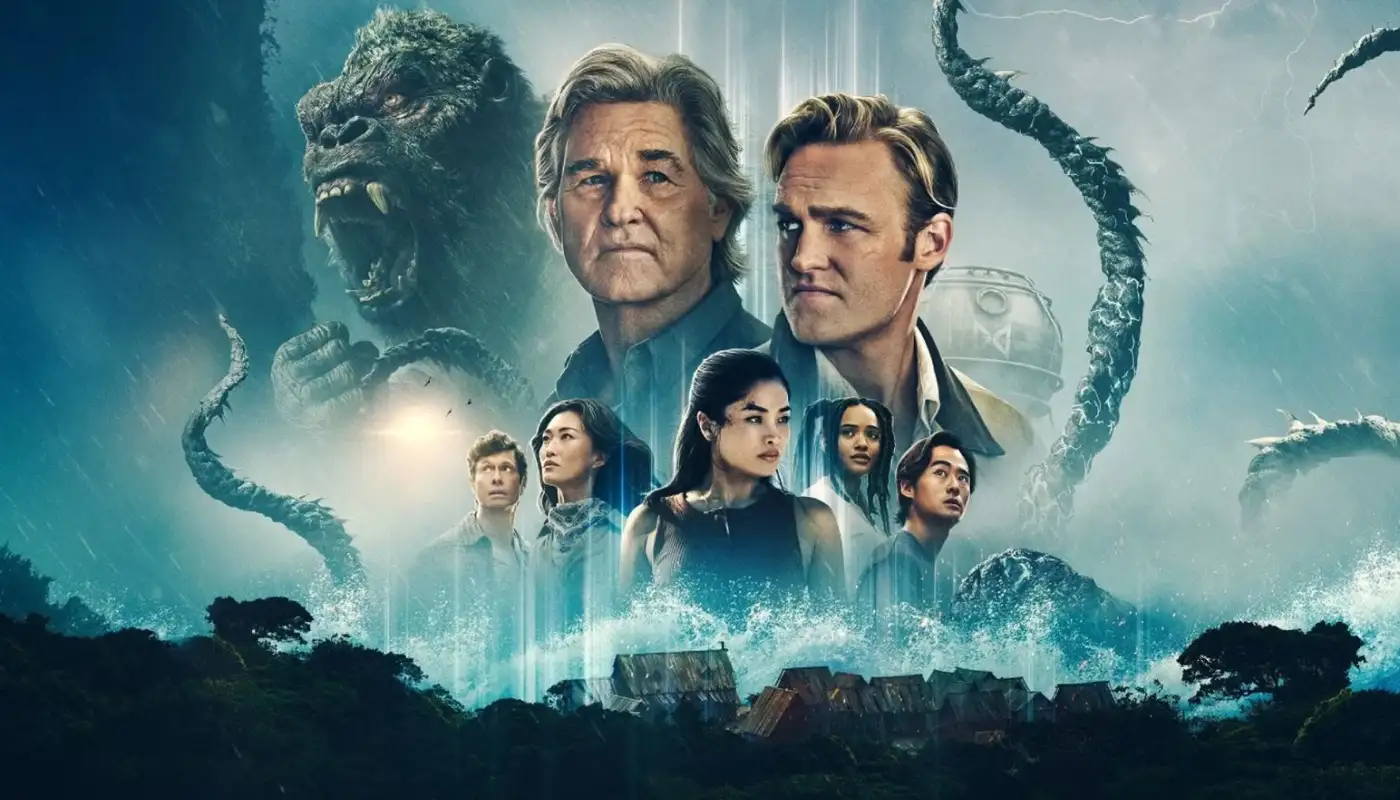
The “MonsterVerse” has always been a cinematic tightrope walk. On one side, you have the awe-inspiring, city-leveling spectacle of Titans like Godzilla and Kong. On the other, you have the human stories—the scientists, soldiers, and families caught in the literal footsteps of gods. While the films often lean heavily into the “brawl,” Apple TV+’s Monarch: Legacy of Monsters Season 1 proved there was a deep, emotional well to tap into within this universe.
Monsters, Myths, and Monarch
Season 2 picks up in the immediate, fractured aftermath of the Season 1 finale. Our protagonists—Cate (Anna Sawai), Kentaro (Ren Watabe), and May (Kiersey Clemons)—are no longer just witnesses to history; they are active participants in a world that has finally accepted the “Titan Reality.”
The narrative center of gravity has moved. While the first season focused heavily on the 1950s origins of Monarch, Season 2 leans into the modern-day tension between Monarch and the rising shadows of corporate competitors. However, the biggest “carrier” of excitement this season is undoubtedly the shift in location. We are no longer just looking at the surface; the show has begun to peel back the layers of the Hollow Earth and Skull Island.
The Return of the Kings
The “Legacy of Monsters” title is taken literally this season. While Godzilla remains a terrifying, background force of nature—a living natural disaster—Season 2 introduces Kong in a way that feels fresh and tragic. This isn’t the “King” we see in the latest films; this is a younger, more isolated Kong, and his interactions with the human cast provide the show’s most poignant moments.
Performances: The Kurt and Wyatt Russell Magic
A Bigger, Bolder Chapter in the Titan Saga
Season 2 wastes no time reminding viewers that this is a world permanently altered by colossal forces. Cities still carry scars from Titan attacks, governments remain fractured in their responses, and Monarch—the shadowy organization at the center of it all—finds itself under increasing scrutiny.
What sets this season apart is its confidence. The storytelling feels more assured, less hesitant. While Season 1 carefully balanced timelines and perspectives, Season 2 streamlines its narrative threads without sacrificing complexity. The result is a smoother, more immersive viewing experience.
The series continues to bridge the gap between intimate human drama and blockbuster spectacle, further expanding the cinematic universe first introduced by Legendary Pictures. Fans of the larger MonsterVerse will appreciate how Season 2 connects narrative dots without relying on heavy-handed exposition. It respects its audience.
The Plot: Intrigue in the Hollow Earth
Season 2 introduces a new “twisted” element to the plot: the Apex Cybernetics foreshadowing. For fans who have watched Godzilla vs. Kong, seeing the seeds of Apex’s corporate greed being sown here adds a layer of dread.
The season revolves around the discovery of a “Titan Beacon”—an ancient frequency that seems to be calling monsters to specific ley lines across the globe. As Monarch scrambles to contain the outbreaks in places like Berlin, London, and Tokyo, the internal politics of the organization begin to crumble.
New Cast Members to Watch
Why Season 2 is Dominating the Rankings
As we track the “Monarch Legacy of Monsters Season 2 review” trends in Google Search Console, several key factors emerge that explain why this season is outperforming its predecessor:
| Feature | Season 1 Focus | Season 2 Evolution |
|---|---|---|
| Primary Titan | Godzilla / Ion Dragon | Godzilla / Kong / New Titans |
| Theme | Family Mystery / Origin | Survival / Global Conspiracy |
| Setting | Surface / Axis Mundi | Surface / Deep Hollow Earth | Pacing | Slow-burn / Investigative | High-octane / Action-Adventure |
Expanding the Monster Mythology
Season 2 dives deeper into the lore surrounding Titans and their ancient origins. The mystery elements introduced in the first season evolve into full-fledged narrative arcs, offering tantalizing glimpses into unexplored corners of this universe.
The show cleverly balances scientific inquiry with mythic undertones. There is a growing sense that Titans are not simply destructive forces of nature but part of a larger, interconnected ecosystem. This philosophical angle elevates the series beyond standard monster fare.
Cinematic Production Quality
Few television series match the cinematic polish displayed here. From sweeping landscapes to claustrophobic underground facilities, Season 2 showcases meticulous production design.
The series employs a global scope, moving across diverse environments that feel authentic and textured. Practical effects blend seamlessly with CGI, enhancing immersion. The sound design deserves particular praise—Godzilla’s roar, reverberating through surround sound systems, remains one of the most iconic auditory signatures in modern genre storytelling.
The musical score complements the visuals beautifully, alternating between haunting minimalism and thunderous orchestration. It underscores emotional beats as effectively as it amplifies action sequences.This level of craftsmanship makes each episode feel like a feature-length film.
Themes of Power, Responsibility, and Legacy
If Season 1 was about discovery, Season 2 is about consequence.
The central theme of legacy resonates throughout the narrative. Monarch itself is a legacy organization, built on secrets and sacrifices. Individual characters grapple with inherited burdens—familial expectations, past mistakes, unresolved trauma.
The Titans serve as metaphors for uncontrollable power. Godzilla represents raw, elemental force—destructive yet potentially protective. Kong embodies intelligence and resilience, a reminder that power can coexist with empathy.
This thematic layering gives the series surprising depth. It asks viewers to consider what humanity’s place is in a world where it is no longer the dominant species.
How Season 2 Elevates the MonsterVerse
While the films in the broader cinematic universe have leaned heavily into spectacle, this series provides connective tissue and emotional grounding. It enriches the franchise without overshadowing it.
Rather than functioning as mere supplemental material, Season 2 feels essential. It expands the universe’s mythology while maintaining its own identity.
There’s a confidence here that suggests long-term planning. Narrative seeds planted early in the season hint at even grander developments ahead. The show doesn’t just react to past films—it actively shapes the future of the Titan saga.
Why Season 2 Works So Well
Several factors contribute to the season’s success:
1. Stronger character focus – Emotional stakes remain front and center.
2. Improved pacing – Narrative threads weave together more seamlessly.
3. Elevated visuals – Titan sequences are breathtaking.
4. Richer mythology – The lore deepens without becoming convoluted.
5. Balanced tone – Action and introspection coexist harmoniously.
Most importantly, the series understands what makes giant monster storytelling compelling. It’s not just about scale—it’s about perspective. Showing Titans through human eyes reinforces both awe and vulnerability.
Final Verdict: An Epic Evolution
Monarch: Legacy of Monsters Season 2 delivers exactly what fans hoped for—and then some. It is grander in scope, sharper in execution, and more emotionally resonant than its predecessor.
By deepening its characters, expanding its mythology, and refining its storytelling, the series cements its place as one of the most ambitious entries in the Titan saga. It proves that monster-driven narratives can be thoughtful, character-rich, and visually stunning all at once.
For longtime fans of Godzilla and Kong, Season 2 offers exhilarating battles and meaningful lore expansion. For newcomers, it provides a compelling entry point into a world where humanity must learn to coexist with forces far beyond its control. In an era crowded with franchise television, this series stands out by remembering a crucial truth: spectacle means little without heart. Season 2 finds that heart—and gives it a thunderous roar.
