
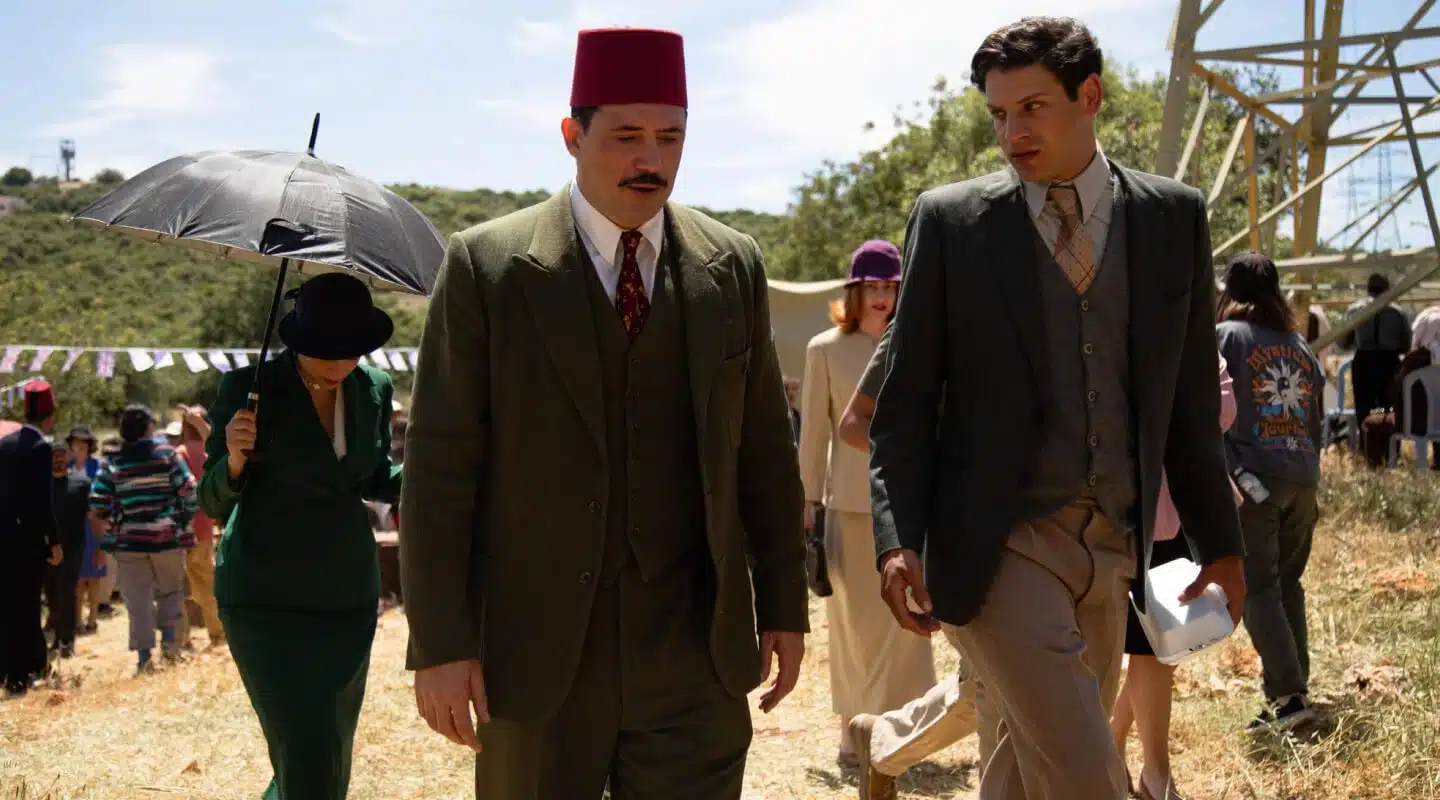
Palestine 36 is a 2025 historical drama that plunges viewers into the 1936–39 Arab revolt against British rule in Mandate Palestine, blending sweeping period storytelling with an urgent, contemporary emotional charge. Written and directed by acclaimed Palestinian filmmaker Annemarie Jacir, the film follows farmers, city intellectuals and British officials as their lives collide around land seizures, colonial violence and the birth of organized resistance, resulting in a work that critics are calling powerful, heartbreaking and essential viewing rather than dry history.
Director, Story & Cast
Palestine 36 is written and directed by Annemarie Jacir, one of Palestine’s leading filmmakers, known for marrying intimate character work with political urgency. Here she reconstructs the early days of the 1936 revolt through the eyes of villagers in Al Bassa and urban Palestinians in Jerusalem, interweaving fictional characters with historical figures and archival BBC material to show how everyday people were pushed from quiet frustration into open rebellion.
The ensemble cast includes Hiam Abbass as Hanan, Kamel El Basha as Abu Rabab, Yasmine Al Massri as journalist Khuloud Atef, Saleh Bakri as activist Khalid, Robert Aramayo as British officer Captain Orde Wingate and Jeremy Irons as the British High Commissioner, with Liam Cunningham also appearing among the colonial administration. The film’s emotional spine is carried by Palestinian families whose land is being taken through a mix of bureaucratic tricks and brute force, and by a younger generation discovering that the fight for their country is inseparable from the fate of their own parents, siblings and neighbours.
Reviews & Ratings
Critics’ responses to Palestine 36 have been strongly positive, with many festival reviews calling it a stirring, ambitious and deeply moving epic. Trade outlets describe it as a powerful Oscar submission that binds the personal to the political and “demands your full attention,” while independent reviewers highlight how it avoids propaganda by giving nuance even to some British characters, showing arrogance and cruelty but never slipping into cartoon villainy. Metacritic’s early score sits in the generally favourable range, and cinephile platforms like Letterboxd are filled with reactions from viewers who call it “brutal but incredible,” saying they cycled through rage, pain and sorrow yet would gladly watch again because of how important and cathartic it feels.
Reviewers repeatedly single out Jacir’s physical style of storytelling, where violence and tenderness are equally tangible: faces are struck, bodies restrained, but there are also hugs, shared meals and fleeting touches between possible lovers. Several scenes are described as mini masterworks, like a train stopped by freedom fighters where passengers, initially strangers, slowly empty pockets and remove jewellery to support the uprising, their faces revealing the moment they recognize a shared cause. Overall, critics say the film may overreach in scope at times but lands with a resonance that feels painfully relevant to today’s headlines.
What Makes Palestine 36 Stand Out
What makes Palestine 36 so compelling is the way it turns what might have been a distant history lesson into something lived and immediate. Rather than just staging battles and speeches, Jacir focuses on the small frictions that build into revolt: a young man humiliated at a checkpoint, a father killed by settlers, a brother arrested for nothing, a journalist forced to publish under a male pseudonym to be taken seriously, and rich Palestinian elites in the city dismissing rural farmers’ suffering because business is good. Through these details the film shows that resistance doesn’t emerge fully formed; it grows out of a thousand small indignities that finally become intolerable.
At the same time, the film is unafraid to show differences within Palestinian society, contrasting peasants in Al Bassa with educated city dwellers, and letting characters argue about tactics, class and the cost of revolt. The British are portrayed with a mix of bureaucratic smugness and chilling brutality, while a few individuals, like a more sympathetic officer, hint at cracks inside the colonial machine. The result is a film that feels both epic and intimate: viewers come away with a clearer sense of how the Palestinian question emerged in the 1930s and with a strong emotional connection to the people caught up in it.
Overall Rating & Outlook
Early aggregated ratings place Palestine 36 comfortably in the “must‑see” category: critics’ averages land around 7.5–8 out of 10, and audience scores trend similarly high, with many calling it one of the year’s most important political dramas. It has been selected as Palestine’s submission for the Best International Feature Film category at the Oscars and has also appeared on several European festival and awards longlists, signalling that it is likely to remain in the conversation through the season.
For viewers looking for a film that combines gripping storytelling with a deeper understanding of how history shapes the present, Palestine 36 offers exactly that: a richly acted, emotionally charged and thought‑provoking drama that lingers long after the credits roll.
