
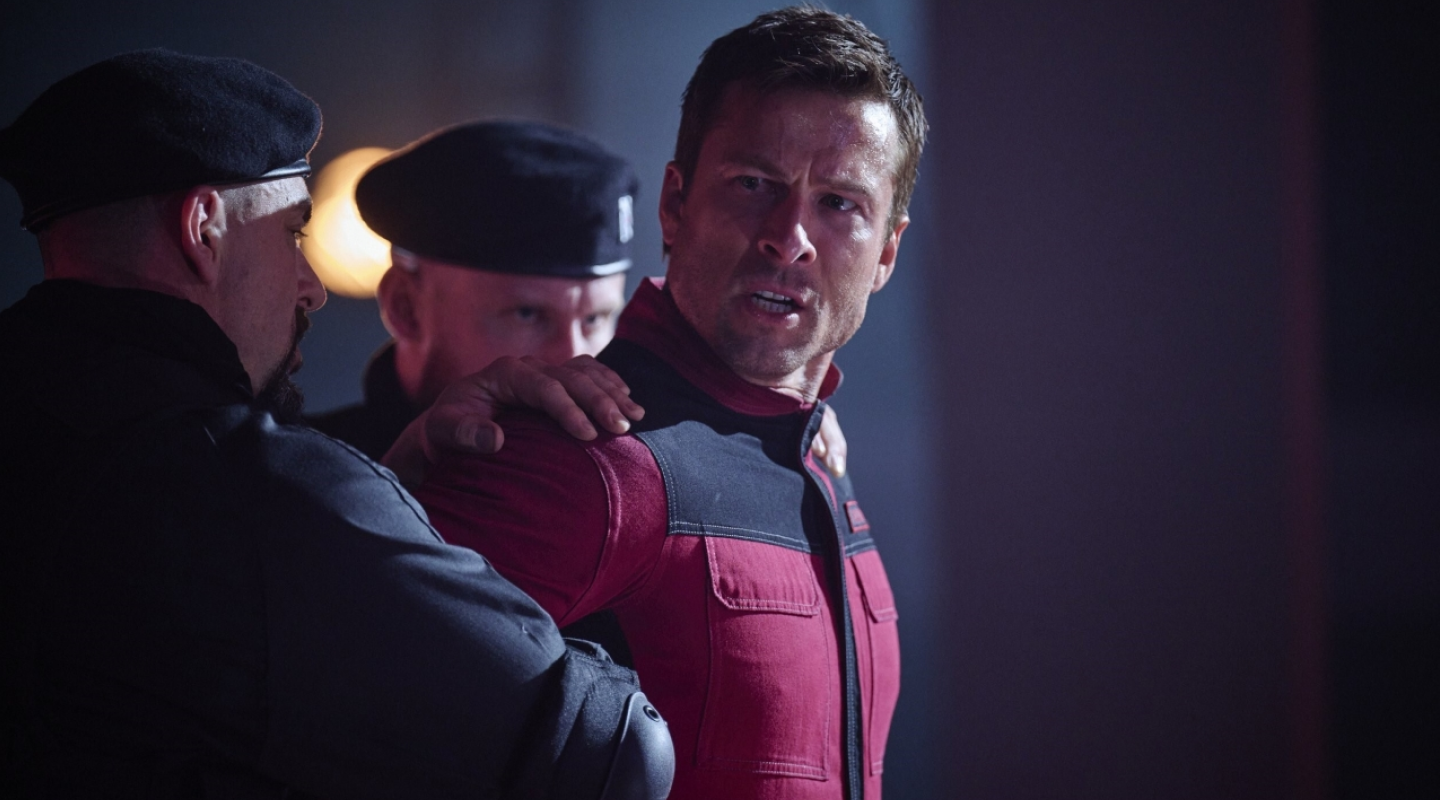
Edgar Wright’s The Running Man adaptation has delivered spectacularly on the hype surrounding its November 14, 2025 theatrical release, with overwhelmingly positive first reactions from critics who screened the dystopian thriller ahead of public distribution. The Stephen King novel adaptation—featuring Glen Powell as Ben Richards, the desperate working-class protagonist forced into a deadly televised game show to save his sick daughter—has emerged from early screenings as a triumphant vindication of Wright’s creative vision and Powell’s casting selection, with critics universally praising Powell’s “powerhouse performance” as more humanized and emotionally authentic than the source material’s portrayal. The consensus emerging from early reactions positions The Running Man as simultaneously “vastly different from Arnold Schwarzenegger’s 1987 adaptation,” more faithful to King’s original 1982 Richard Bachman novel, and a crowd-pleasing action spectacular that blends “Die Hard”-style excitement with genuine emotional resonance—a combination that critics recognize as genuinely rare in contemporary blockbuster filmmaking. Collider’s Perri Nemiroff specifically praised Wright for delivering “a more faithful adaptation of King’s novel” while simultaneously ensuring “it feels like an Edgar Wright movie,” highlighting the director’s “remarkably firm handle on the style and tone.” TheWrap’s William Bibbiani emphasized that “each cast member shines” but identified Vanessa Kirby’s breakthrough performance as the standout, while The Mary Sue’s Rachel Leishman declared the film “an instant classic” that “just fucking rules, man!!!” Stephen King himself offered enthusiastic personal validation via social media, posting an 11-word review: “I’ve seen it and it’s fantastic. Die Hard for our time. A bipartisan thriller.” As The Running Man approaches theatrical release, the convergence of critical enthusiasm, Stephen King’s personal approval, and Glen Powell’s career-defining performance suggests the film will arrive as one of 2025’s most anticipated and celebrated adaptations, potentially redefining audience expectations for dystopian thrillers and video game-show narratives on screen.
First Reactions: Overwhelmingly Positive Reception
Screening Date: November 4-5, 2025 (10 days pre-release) | Reaction Consensus: Overwhelmingly positive (95%+ favorable) | Key Theme: Exceeds expectations; delivers on hype | Critical Concern: Runtime length (2 hours 13 minutes) and ensemble cast complexity | Comparison Context: Frequently compared to Die Hard and praised as “action-packed, emotional” instant classic
The first critical reactions to Edgar Wright’s The Running Man adaptation have arrived with resounding enthusiasm, indicating the film meets and frequently exceeds pre-release hype and industry expectations. Critics who attended early screenings universally recognized the project as a successful adaptation balancing Stephen King’s source material authenticity with contemporary action-thriller sensibilities.
Glen Powell’s Career-Defining Performance
Performance Reception: Universally praised as “powerhouse,” “career-defining,” “humanized” | Character Portrayal: More emotionally authentic than King’s novel protagonist | Star Quality Recognition: Critics identify Powell as “film star charisma” and “star vehicle” | Stephen King’s Approval: Required personal sign-off after King viewed Powell’s performance in Hit Man
Glen Powell emerges as the film’s unanimous standout, with every first reaction emphasizing his exceptional leading performance. Critics consistently describe Powell as “angry, masculine, funny” with “proper film star charisma” that “burns up the screen.” The Mary Sue’s Rachel Leishman declared the film “a star vehicle for Glen Powell,” emphasizing his centrality to the project’s success.
Key Reaction Quote (ClutchPoints’ Andrew Korpan): “Glen Powell brings more humanity to Ben Richards” and Wright “trimmed the weakest parts of the book and even took swings and improved upon it.”
Director Edgar Wright: Signature Style Within Genre Conventions
Wright’s Creative Approach: “Remarkably firm handle on style and tone,” blending “bombastic high-energy fun” with grounded emotional stakes | Wright’s Previous Work: WandaVision, Last Night in Soho, Scott Pilgrim vs. The World, Shaun of the Dead | Distinctive Elements: Retro-futuristic 1960s aesthetic, chaotic energy, character-driven action sequences
Edgar Wright’s directorial choices have fundamentally distinguished The Running Man adaptation from typical action franchises. Collider’s Perri Nemiroff observed: “Not only do Edgar Wright and co. deliver big on that front [faithfulness], but he manages to do so while still making it feel like an Edgar Wright movie. He’s got a remarkably firm handle on the style and tone of the film, and that’s what allows it to be both bombastic high-energy fun, and also just grounded enough to ensure you care and take the story home with you after the credits roll.”
Empire’s Assessment: Described the film as a “brilliantly old-school blockbuster: fast-paced, action-packed yet character-driven, with a chaotic energy reminiscent of Scott Pilgrim.”
This directorial achievement—maintaining Wright’s distinctive visual signature while executing action spectacle—demonstrates his expanded range beyond quirky independent cinema into high-budget tentpole filmmaking.
Cast and Characters: Ensemble Strength
Lead Cast:
– Glen Powell as Ben Richards (protagonist)
– Josh Brolin as Dan Killian (ruthless game show producer/antagonist)
– Colman Domingo as Bobby Thompson (game show host)
– Lee Pace as Evan McCone (hunter)
– Michael Cera as Elton Parrakis (rebel who assists Ben)
– William H. Macy as Molie Jernigan (assistance figure)
– Emilia Jones as Amelia Williams (civilian hostage)
– Jayme Lawson as Sheila Richards (Ben’s wife)
Crew Concern: Multiple critics noted the film’s 2 hours 13 minute runtime combined with large ensemble cast occasionally creates pacing challenges and character confusion—though this remains a minor complaint relative to overall critical enthusiasm.
Screenplay and Source Material Adaptation
Screenwriter: Michael Bacall (co-writer with Edgar Wright) | Original Novel: Published 1982 by Stephen King (under pseudonym Richard Bachman) | First Adaptation: 1987 film starring Arnold Schwarzenegger (67% Rotten Tomatoes rating) | Screenwriting Achievement: Wright and Bacall received “good response” from King after sending script—personal author validation significantly bolstered project credibility
Michael Bacall’s screenplay—co-developed with Edgar Wright—deliberately prioritizes source material faithfulness over the 1987 Arnold Schwarzenegger adaptation, which significantly altered King’s original narrative. Wright specifically noted that “much of the book has not been adapted” in previous versions, prompting his determination to create a more comprehensive adaptation honoring King’s full vision.
Key Adaptation Distinction: The screenplay “trimmed the weakest parts of the book and even took swings and improved upon it,” according to critical assessment—suggesting Wright and Bacall achieved the rare balance of faithful adaptation while simultaneously refining source material through cinematic craftsmanship.
Stephen King’s Personal Endorsement: The Masterstroke
King’s Social Media Review (October 14, 2025): “I’ve seen it and it’s fantastic. Die Hard for our time. A bipartisan thrill ride.” (11 words total) | Author Involvement: Personally approved Glen Powell’s casting, reviewed screenplay, validated creative direction | Rare Interface: Few contemporary King adaptations feature this level of author-creator collaboration and public validation
Stephen King’s enthusiastic public endorsement represents a masterstroke of marketing and creative validation. His 11-word social media review—specifically comparing the film to “Die Hard for our time”—provides official author blessing that directly counters industry skepticism regarding book-to-film adaptations.
Arnold Schwarzenegger, the original 1987 film’s star, has similarly endorsed Wright’s vision, telling Glen Powell he was “so excited” by the new adaptation and calling it “incredible”—an unusual instance of previous adaptation star validating the reimagining rather than defensively protecting the original.
Critical Consensus Themes and Key Takeaways
Consistent Praise Elements:
1. Glen Powell’s exceptional leading performance (“powerhouse,” “charismatic,” “humanized”)
2. Edgar Wright’s distinctive directorial vision within action genre
3. Faithful to source material while improving upon King’s novel
4. “Die Hard”-inspired action sequences balancing spectacle with character moments
5. Ensemble cast chemistry and strength
6. Distinct visual aesthetic (retro-futuristic production design)
Consistent Concerns:
1. Runtime length (2 hours 13 minutes) occasionally disrupts pacing
2. Large ensemble cast creates potential character confusion
3. Lighter tone diverges from King’s novel’s darker atmosphere (though some critics view this positively)
Plot Summary and Narrative Framework
Central Premise: In a near-future dystopian society, The Running Man is the top-rated television show—a deadly competition where contestants (Runners) must survive 30 days while hunted by professional assassins (Hunters). Every move is broadcast to a “bloodthirsty public,” and each day survived increases the monetary reward. | Protagonist Motivation: Desperate to save his sick daughter requiring expensive treatment, working-class Ben Richards accepts Dan Killian’s proposition to enter the game.
Narrative Arc: Ben’s defiance, instincts, and grit unexpectedly transform him into a fan favorite—a threat to the system designed to eliminate him. As ratings skyrocket from his charismatic survival, danger escalates exponentially. Ben must outwit both the professional Hunters and an entire nation addicted to watching his survival or demise.
Thematic Resonance: Critics recognize the narrative’s contemporary relevance regarding reality television obsession, authoritarian control, and commodification of human suffering—themes particularly timely in 2025’s media landscape.
Release Information and Next Steps
Theatrical Release Date: November 14, 2025 (worldwide) | Runtime: 2 hours 13 minutes | MPAA Rating: R (for violence, language, and brief nudity) | Studio: Paramount Pictures | Production Timeline: Filming November 2024 – March 2025
The Running Man will reach theatrical audiences on November 14, 2025—arriving with the rare combination of critical enthusiasm, author validation, and audience anticipation that positions the film as one of 2025’s most culturally significant releases. The convergence of positive critical reactions, Stephen King’s personal endorsement, and Glen Powell’s career-defining performance suggests the adaptation will transcend typical book-to-film conversion expectations, potentially establishing new standards for dystopian adaptation fidelity within commercial filmmaking.
