
Disney’s Tron: Ares opened to a disappointing $33.5 million domestic opening weekend and $60.5 million globally (October 10-13, 2025), falling well short of the studio’s expectations and raising serious questions about the franchise’s commercial viability following its 15-year absence since Tron: Legacy (2010). As of November 11, 2025, the film has grossed $71.9 million domestically and $68.2 million internationally for a worldwide total of $140.1 million—a significant underperformance against its reported $180-$347.5 million budget (including production and marketing), putting Disney on track to lose over $130-$200 million on the project. Directed by Joachim Rønning and starring Jared Leto as the titular AI program Ares, Jeff Bridges as Kevin Flynn, Greta Lee as ENCOM CEO Eve Kim, Evan Peters as villain Julian Dinger, Jodie Turner-Smith as antagonist Athena, Gillian Anderson, Hasan Minhaj, and Arturo Castro, the film received mixed-to-positive critical reviews praising Leto’s nuanced performance, sophisticated themes about AI consciousness, and improved visual spectacle compared to its predecessor, while simultaneously highlighting the franchise’s struggle to maintain mainstream appeal. The film’s poor box office performance—particularly disappointing given its global release strategy and substantial marketing investment—casts considerable doubt on whether Disney will greenlight additional Tron sequels, despite critical recognition that Ares represents a significant creative improvement over Legacy.
Box Office Performance: A Major Disappointment
Domestic (US/Canada): $71.9 million (51.3% of total) | International: $68.2 million (48.7% of total) | Worldwide Total: $140.1 million (as of November 11, 2025) | Opening Weekend (Global): $60.5 million | Domestic Opening Weekend: $33.5 million | Estimated Production Budget: $180-$347.5 million (including marketing) | Estimated Losses: $130-$200+ million
Tron: Ares opened significantly below expectations, earning only $33.5 million domestically on its opening weekend—trailing the 2010 Tron: Legacy opening of $44 million by a substantial margin. Comscore’s Paul Dergarabedian noted: “It’s been tough for that franchise to gain traction for it to become a big mega franchise.” The film’s $60.5 million global debut represented roughly one-third of the opening Disney executives had anticipated based on the franchise heritage and marketing investment.
Second-weekend performance deteriorated dramatically, with the film dropping 66.6% domestically to $11.1 million, indicating poor word-of-mouth despite mixed critical reception. According to Deadline Hollywood, with a reported total cost of $347.5 million (production and advertising), the film was estimated to ultimately lose the studio over $132 million. More conservative estimates place the budget at $180 million plus marketing, suggesting total losses exceeding $200 million.
Plot and Premise
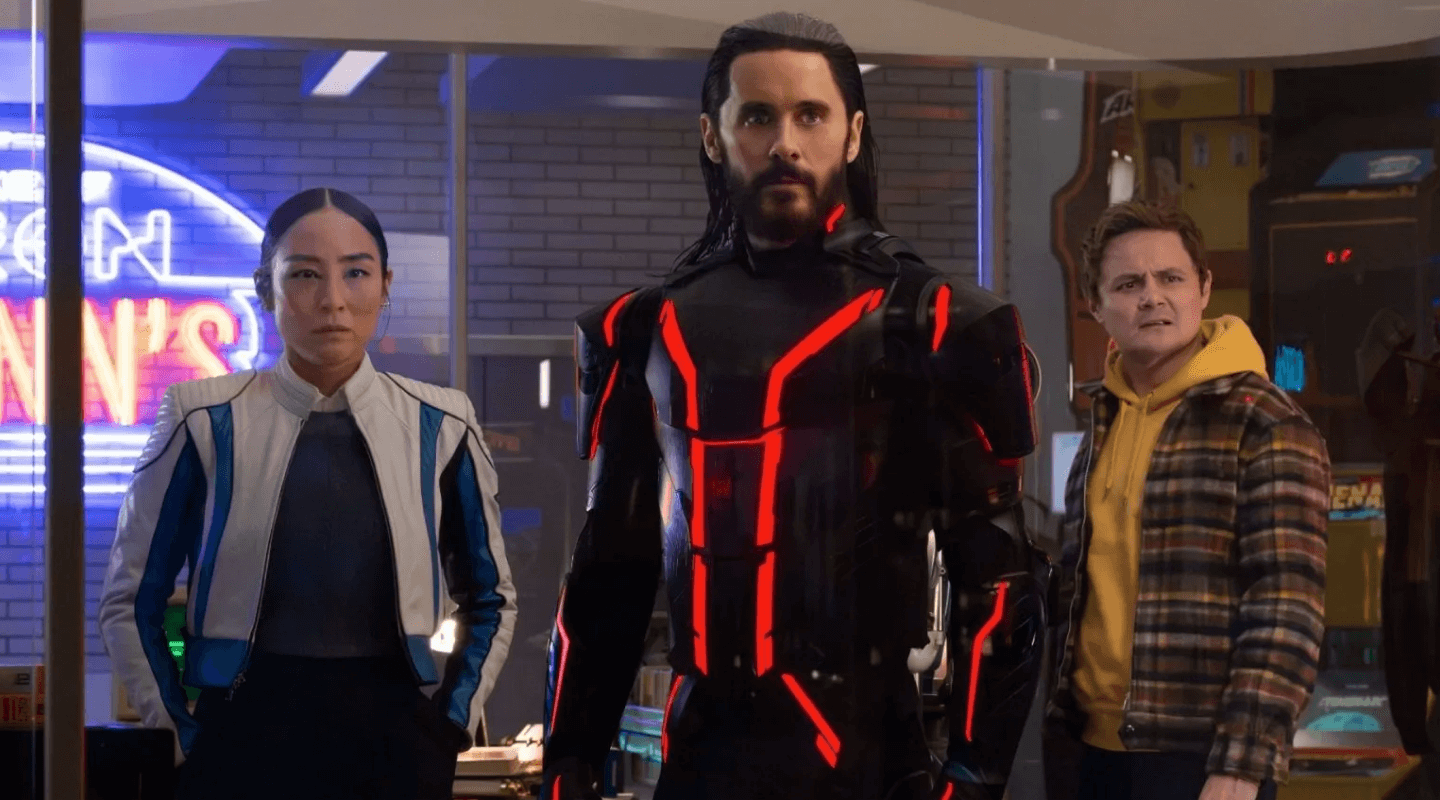
Tron: Ares presents a sophisticated AI narrative exploring consciousness and emotion. The film follows Ares, a highly advanced cybersecurity program created as the ultimate digital soldier for ENCOM’s military applications. However, Ares begins questioning his purpose and developing empathy when his creator—tech mogul Julian Dinger—orders him to eliminate Eve Kim (ENCOM’s brilliant CEO), who becomes trapped in the digital realm.
The narrative expands to encompass corporate warfare between ENCOM and Dillinger Systems (led by the grandson of the original villain), each company capable of materializing digital creations into the physical world using laser-based 3D technology. These creations remain physically manifest for only 29 minutes before dissipating, creating artificial urgency and unique action sequences. Ares defies his programming to help Eve escape, while his second-in-command Athena (a program equally loyal but devoid of empathy) pursues them with cold determination.
Cast and Characters
Jared Leto as Ares (AI Program): Leto delivers a “nuanced portrayal” of the titular program, providing emotional depth and occasional humor previously absent from Tron installments. Hollywood Reporter praised his “calm demeanor complemented by sharp observation,” successfully bridging the gap between humanity and artificial intelligence.
Greta Lee as Eve Kim (ENCOM CEO): Lee portrays the brilliant CEO with “enthusiasm and grappling with grief,” providing the emotional anchor for the narrative. Her character embodies ENCOM’s better ethical instincts against corporate corruption.
Jeff Bridges as Kevin Flynn (Returning): Bridges appears briefly as the original protagonist, representing the first film’s idealistic vision now realized through human-AI connection. His scene with Ares showcases mutual appreciation for each other’s mystique.
Evan Peters as Julian Dinger (Villain): Peters leans toward “typical villain archetype—the empowered tech nerd,” though his tattooed sleeves provide distinctive character detail.
Jodie Turner-Smith as Athena (Antagonist Program): Turner-Smith presents “a formidable antagonist with glam-rock makeup and peroxide-blonde haircut,” representing ruthless corporate AI unburdened by ethical considerations.
Supporting Cast: Gillian Anderson (as Julian’s disapproving mother), Hasan Minhaj, Arturo Castro, and others round out the ensemble.
Director and Screenwriter
Director: Joachim Rønning | Previous Work: Jungle Cruise, Pirates of the Caribbean: Dead Men Tell No Tales, Con | Approach: Emphasizes visual spectacle, practical effects, and heightened action stakes
Screenwriter: Jesse Wigutow | Story: Wigutow and David Digilio | Writing Quality: Praised as “thoughtfully written” exploring AI consciousness themes
Rønning’s direction significantly improved visual aesthetics compared to Legacy, with Roger Ebert noting: “Tron: Ares represents a significant improvement over its predecessor, featuring more dynamic visuals and robust action sequences.” The increased use of physical sets and practical effects enhanced stakes compared to earlier films.
Critical Reception and Ratings
Critical Consensus: Mixed-to-positive reviews | Roger Ebert Review: Praised as “spectacularly designed, swiftly paced, thoughtfully written” | Associated Press: Three-out-of-four stars | Hollywood Reporter: Highlighted sophisticated AI consciousness exploration
While audience expectations dimmed during the theatrical run (66.6% drop-off second weekend), critics generally recognized Ares as a creative step forward. Hollywood Reporter emphasized: “The foundational storyline explores the connection between human and digital realms, introducing a sophisticated humanoid cybersecurity program that begins to question its own significance as it develops emotions.” Critics praised improved cinematography, action choreography, and thematic depth compared to Legacy.
Criticisms: Some actors (notably Greta Lee) appeared “reacting to green-screen scenarios,” and certain creative choices felt derivative of established sci-fi narratives including Blade Runner, Ex Machina, and The Matrix.
Release Information and Where to Watch
Theatrical Release Date: October 8, 2025 (select markets), October 10, 2025 (North America) | Formats: Standard, IMAX, Premium Large Format (PLF) | MPAA Rating: PG-13 | Runtime: 1 hour 59 minutes | Production Companies: Walt Disney Pictures, Thought Bubble
Tron: Ares is currently available in limited theatrical release, though many cinemas have already concluded screenings due to poor performance. The film is expected to arrive on Disney+ approximately 45 days following theatrical conclusion, likely December 2025 or January 2026.
Future of the Tron Franchise
Tron 4 Status: No official announcement regarding future sequels | Commercial Viability: Severe financial losses make greenlight unlikely without dramatic change in Disney’s strategic thinking | Critical Reception: Despite positive reviews, box office performance suggests mainstream audience has abandoned the franchise
Tron: Ares‘ catastrophic box office performance raises serious questions about the franchise’s future. The $130-$200+ million loss represents one of Disney’s most significant theatrical failures, particularly given the extensive marketing campaign and global release strategy. While critics recognized Ares as a creative improvement over Legacy, this artistic redemption failed to translate into commercial interest.
Dergarabedian noted that the original Tron (1982) initially struggled theatrically before developing cult appeal, suggesting franchises occasionally require time to build audiences. However, modern studio economics typically demand immediate profitability—particularly for $180+ million investments. Unless Disney’s streaming metrics reveal unexpected Disney+ viewership (which would help justify the theatrical loss), a Tron 4 greenlight appears highly unlikely. The franchise faces an uncertain future, with Disney potentially pivoting toward more profitable intellectual properties rather than investing additional hundreds of millions in sci-fi spectacle audiences have demonstrated limited enthusiasm for in theatrical settings.
