
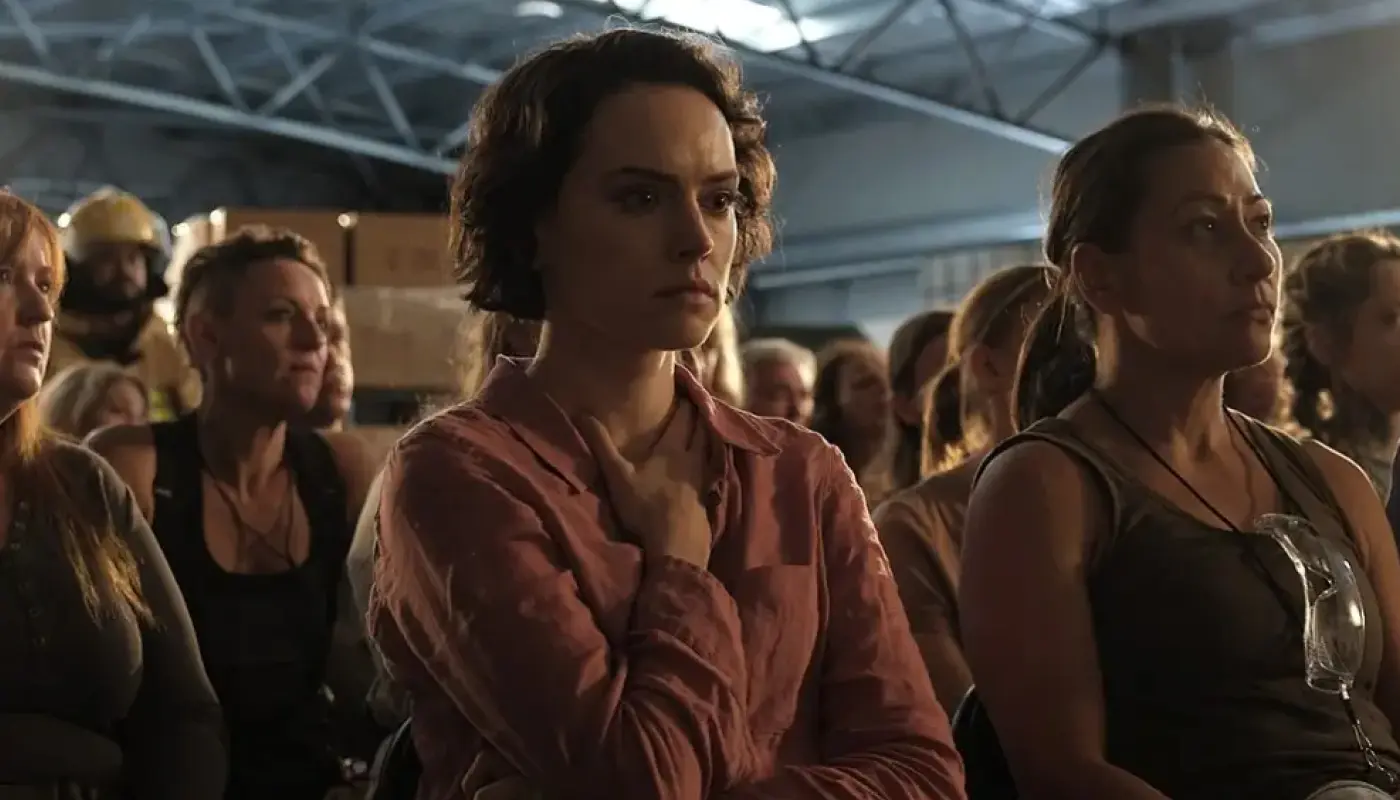
We Bury the Dead marks a striking shift for Daisy Ridley, placing her firmly in the horror genre—and the result is both unsettling and emotionally grounded. As one of the first major releases of 2026, the film sets an eerie tone for the year ahead, blending atmospheric horror with strong performances and slow-burning tension. Rather than relying on shock value alone, We Bury the Dead leans into mood, silence, and psychological unease. It’s the kind of horror film that lingers after the credits roll, and Daisy Ridley’s presence anchors it from start to finish.
Plot: Grief In A Zombie Warzone
Set in a devastated, post-disaster Tasmania, the film follows Ava Newman (Ridley), who joins a government “body retrieval unit” to search for her missing husband after a catastrophic military experiment. As she bags corpses in burned-out homes and empty streets, she discovers the dead are not staying dead—and each body she touches forces her to confront the possibility that her husband is among them.
Partnered with enigmatic biker Clay (Brenton Thwaites), Ava navigates mass graves, ruined towns, and increasingly aggressive undead while the military gaslights the public, insisting the risen are harmless and slow. The real tension comes from her emotional unraveling: every mission blurs the line between duty, denial, and the moment she must finally let go.
Performances: Daisy Ridley Carries The Pain
Ridley delivers one of her most grounded turns yet—less action-hero, more broken spouse clinging to hope in a world that keeps telling her to move on. Critics highlight how she sells Ava’s trauma in quiet close-ups as much as in screaming showdowns, making the horror feel painfully human.
Thwaites brings surprising warmth and dark humor as Clay, a rough-edged volunteer who slowly becomes Ava’s emotional anchor, their bond forming a fragile lifeline amid smoke, rot, and walking corpses. Supporting turns from Mark Coles Smith and the retrieval crew flesh out a world where protocol often crushes compassion.
Direction, Atmosphere & Scares
Zak Hilditch leans into bleak beauty: smoke-choked skies, empty highways, and coastline graveyards give the movie an almost art-house zombie vibe. Practical makeup and prosthetics make the undead look scorched, twitchy, and unsettlingly mournful rather than cartoonish, earning praise even from genre-hardened reviewers.
The pacing is deliberately slow and contemplative, which some critics call a strength and others a drag; action comes in sharp, nasty bursts instead of constant chaos. When the zombies do attack, they’re brutal and relentless, but the film always pulls back to focus on Ava’s internal horror rather than just body counts.
Critical Reception & Audience Buzz
Early reviews describe “We Bury the Dead” as a strong, atmospheric entry in a crowded zombie genre, with many praising its grief-driven storytelling over cheap thrills. On aggregate, scores hover in the low-to-mid 60s on critic indexes, signaling a solid, if divisive, genre film that rewards patient viewers.
Some reviewers argue the third act slips into familiar zombie tropes after a bold, introspective setup, but even they credit Ridley’s performance and the film’s eerie world-building. For horror fans tired of loud, empty jump-scare fests, this feels like a quieter, more grown-up apocalypse worth talking about.
Final Verdict
We Bury the Dead is a moody, well-acted horror film that benefits greatly from Daisy Ridley’s commanding performance. It may not be for viewers seeking nonstop action or constant scares, but for those who appreciate slow-burn horror with emotional depth, it delivers a haunting experience.
For SEO-savvy viewers: As the first major horror release of 2026, We Bury the Dead sets a confident and chilling tone—one that lingers long after the screen fades to black.
Rating: ★★★★☆ (4/5)
