
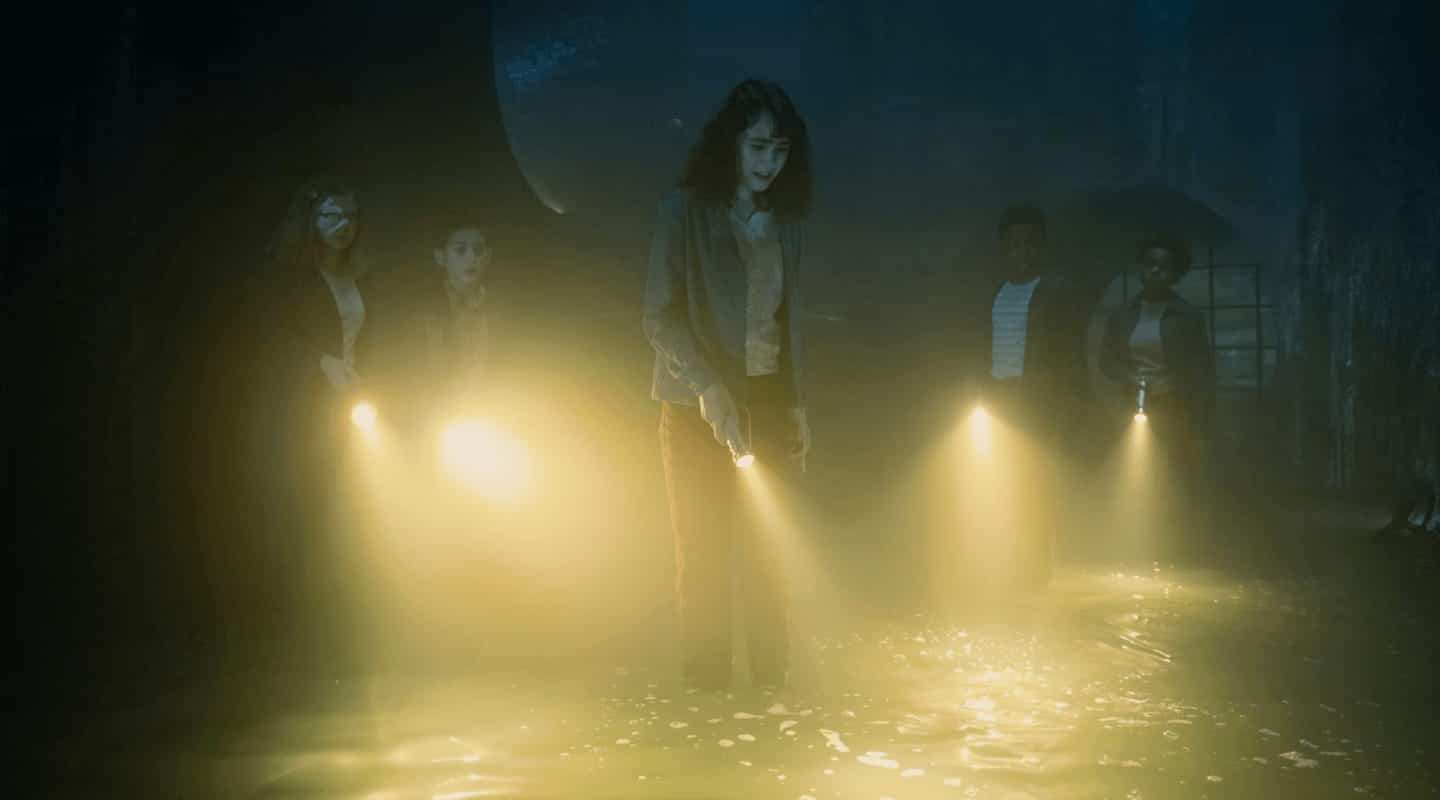
It: Welcome to Derry‘s fifth episode, “29 Neibolt Street,” aired on November 23, 2025, delivering what critics describe as “a game-changing twist” and the long-awaited first proper appearance of Bill Skarsgård’s Pennywise in full clown form. The episode escalates the horror substantially while maintaining character-driven storytelling, earning praise for its “palpable tension and terror” alongside strong sewer sequences that pit the Losers Club against It in its domain. Directed by Andy Muschietti (who also executive produces the HBO series), episode 5 features powerhouse performances from Matilda Lawler (Marge), Clara Stack (Lilly), Miles Ekhardt (Matty’s traumatic return), Jovan Adepo (Leroy Hanlon), and Chris Chalk (Dick Hallorann), with Skarsgård’s performance receiving particular acclaim for seamlessly transitioning between his big-screen portrayal and television storytelling. The episode represents a significant escalation from the series’ earlier episodes, which earned solid audience reception (8.5-9/10 on IMDb, 87% Rotten Tomatoes audience score) despite mixed critical consensus regarding pacing and CGI quality. Episode 5 solidifies the series as a more character-focused drama than a traditional horror show, earning the descriptor “bleak, deromanticized Stranger Things” that explores both supernatural and historical horrors through a 1960s racial justice lens.
Cast, Director, and Creative Team
Director (Episode 5): Andy Muschietti (also executive producer & showrunner)
Executive Producer: Andy Muschietti, Barbara Muschietti, Stephen King, Bill Skarsgård
Writers: Jason Fuchs, Stephen King, Austin Guzman
Network: HBO
Production Companies: New Line Television, Sonar Entertainment, Warner Bros. Television
Main Cast (Episode 5):
– Bill Skarsgård as Pennywise the Dancing Clown (reprising film role)
– Matilda Lawler as Marge Truman (child Loser)
– Clara Stack as Lilly Bainbridge (child Loser)
– Miles Ekhardt as Matthew “Matty” Clements (traumatized returnee)
– Jovan Adepo as Major Leroy Hanlon (military officer, parent)
– Chris Chalk as Dick Hallorann (psychic mentor)
– Mikkal Karim Fidler as Teddy Uris (child Loser)
– Joshua Odjick as Taniel (child Loser)
– Jack Molloy Legault as Phil Malkin (child Loser)
– Kimberly Guerrero as Rose (recurring, racial justice focus)
– James Remar as General Francis Shaw
Episode Runtime: 68 minutes
Air Date: November 23, 2025
Episode Number: Season 1, Episode 5 of 8
Episode 5 Review & Analysis
Screen Rant Review Summary: “It: Welcome to Derry floats into the back end of its first season with a game-changing twist, a bunch of compelling character moments, and the long-awaited appearance of a certain dancing clown.”
Positive Elements:
– **Matty’s Return:** Miles Ekhardt delivers “an incredible job of showing the impact of the trauma of being trapped in the sewer with Pennywise. He’s pale as a ghost, visibly shaken, and seems to have aged years since we last saw him.”
– **Pennywise’s Appearance:** Bill Skarsgård’s return “doesn’t disappoint,” with critics praising his seamless transition from film to television. His performance maintains the menacing, darkly comedic terror audiences remember from the movies.
– **Character Development:** Emotional depth from Lilly and Marge’s reconciliation to Hallorann’s harrowing flashback to his abusive father. Character work is strongest element of the episode.
– **Racial Commentary:** The show “ties into racial commentary, contrasting its ghost story with the then-ongoing civil rights movement” by showing only characters of color and marginalized adults taking the threat seriously.
– **Pacing & Escalation:** Episode 5 beautifully escalates the show as the narrative heads into its final act.
Critical Reservations:
– **CGI Limitations:** “Lame-duck CGI” continues plaguing horror sequences. The “zombie Uncle Sam” scene feels “just a little too cute” rather than genuinely terrifying.
– **Drug-Induced Hallucinations:** When kids are exposed to It’s reality-warping drugs in the sewer, “they just get wobbly, slur their speech and see double”—”pretty significant missed opportunity” to visualize Pennywise’s illusory nightmares more compellingly.
– **Pacing Issues:** Hank’s subplot about going on the lam “drags on the pacing” when disconnected from pressing underground events.
– **Police Procedural Repetition:** The show “feels the need to come up with a new excuse not to tell the cops at every single turn,” whereas the films established grownups as inherently useless more efficiently.
Overall Assessment: “Thanks to its lame-duck CGI, It: Welcome to Derry still isn’t very scary—seriously, would it have been so hard to create a zombie Uncle Sam with practical effects? But, while it doesn’t really work as a horror show, it does work as a straightforward drama. I’d rather watch a horror show with compelling characters and very few genuine scares than a horror show with plenty of scares but painfully one-dimensional characters.”
YouTube Reviewer Consensus: Coy Jandreau described episode 5 as “the best episode to date,” nearly tied with episode 4. The episode delivers “such palpable tension and terror throughout,” with “super impressed with the show’s pacing and restraint to bring us Pennywise in this form, at this point.”
Previous Episodes Ratings & Reception
Series-Wide Reception:
– IMDb Average (All Episodes): 8.5-9/10
– Rotten Tomatoes Audience Score: 87% (Certified Fresh)
– Rotten Tomatoes Critics Score: Mixed (to be finalized)
Episode 1 “The Pilot”:
– IMDb: 8.8/10 (10,000+ ratings)
– Reception: “So far as good as the movies,” “great pilot episode that is building the season”
– Highlights: Opening sequence praised as brutal and graphic, strong casting of child actors, authentic King-esque atmosphere
– Criticisms: “Corny dialogues,” some generic dialogue amid the setup
Episode 2-4 (Combined Reception):
– Average IMDb: 8.4-8.7/10
– Audience Sentiment: “Building to a blockbuster,” “scary and gruesome,” “nightmares-inducing visuals”
– Consistent Praise: Child Losers Club actors, world-building, Stranger Things-like tone but “way gorier”
– Consistent Criticism: CGI quality issues (particularly water creatures), slowburn pacing frustrates some viewers
Viewership & Social Media Buzz:
– Strong social engagement, particularly among Stephen King devotees and It franchise fans
– Some backlash over “DEI casting” from certain audience segments, but mainstream reception overwhelmingly positive
– HBO maintained Top 10 trending through episode 5, indicating strong word-of-mouth
Quality Trajectory: Episodes 4-5 represent peak quality of season, with earlier episodes establishing characters and mythology, final three episodes (5-8) building toward climax.
Plot Overview: Episode 5 “29 Neibolt Street”
Following Marge’s near-fatal encounter with It last episode, “29 Neibolt Street” opens with the central relationship theme of reunion and reconciliation. Marge covers for the guilt-stricken Lilly after the attack, and their friendship’s sincerity becomes evident. However, the episode’s dramatic pivot arrives with Matty Clements’ shocking return from the sewers—traumatized, pale, and visibly aged by his harrowing experience. His refusal to involve police sets off a chain reaction, while Major Leroy Hanlon and Dick Hallorann lead an expedition into Derry’s legendary sewers where Pennywise awaits. The soldiers’ expedition showcases atmospheric tension through body-mounted red lights and deep-yellow flashlight beams, but It picks them off methodically, forcing Hanlon and Hallorann to confront the true scope of their danger. Subplots regarding Hank’s affair, Mrs. Kersh’s hidden identity, and the town’s simmering racial prejudices create narrative texture, culminating in Pennywise’s full-form appearance that terrorizes and tantalizes the Losers Club toward the season’s climax.
Series Significance and Ongoing Themes
It: Welcome to Derry represents a departure from traditional horror television by functioning primarily as character-driven drama with supernatural elements, rather than a conventional scare-factory series. By weaving 1960s racial justice struggles with Pennywise’s supernatural terror, the show creates thematic depth absent from the films. The creative decision to emphasize character authenticity over CGI scares has earned critical favor despite audience divisions, establishing the series as “a bleak, deromanticized Stranger Things that accurately reflects the harshness of its historical setting without a hint of nostalgia.” With three episodes remaining, the series appears positioned for a strong conclusion that honors both Stephen King’s source material and the specific historical context that grounds Derry’s particular horrors in both the supernatural and the social.
